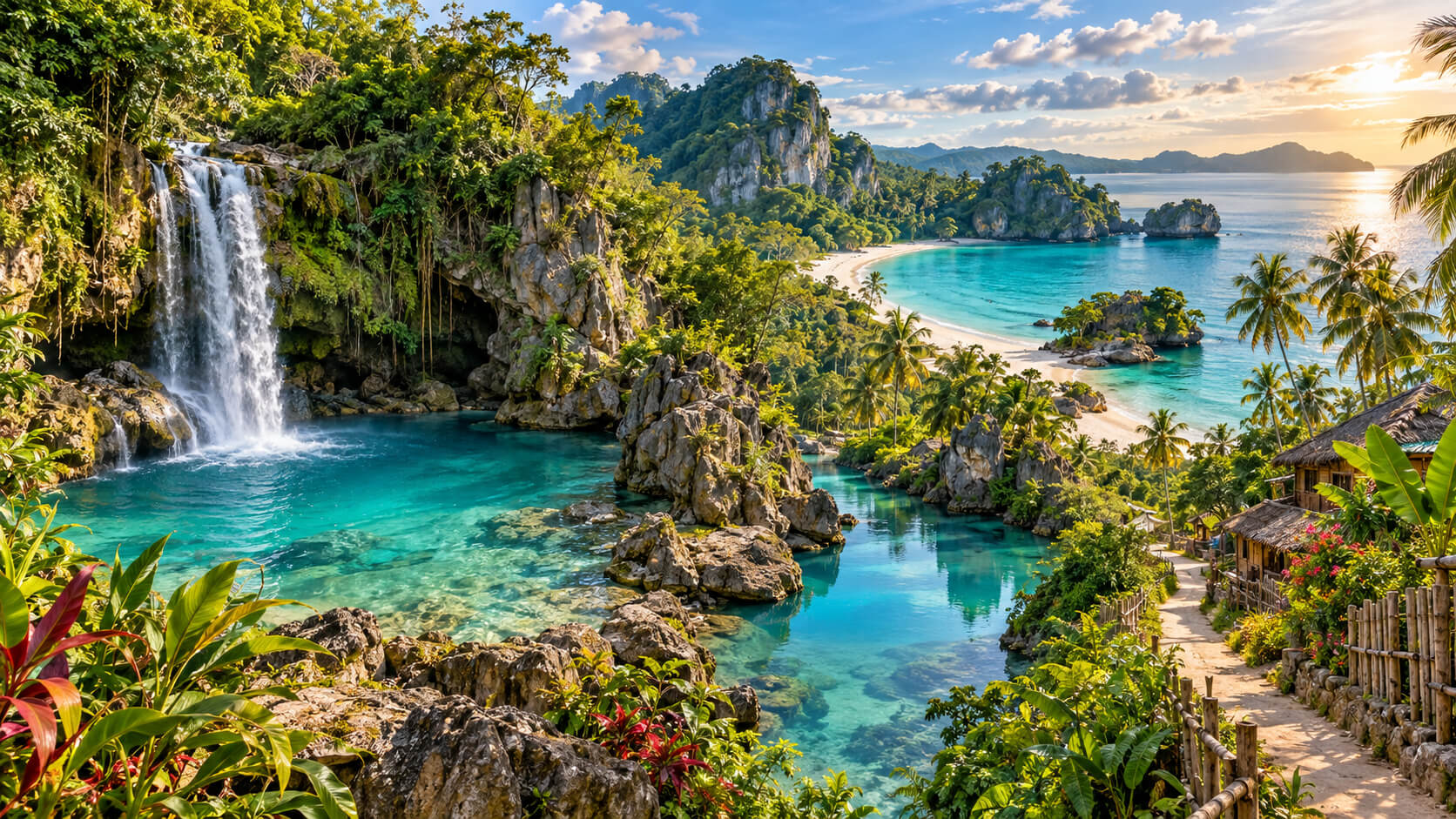
Can-Umantad Falls
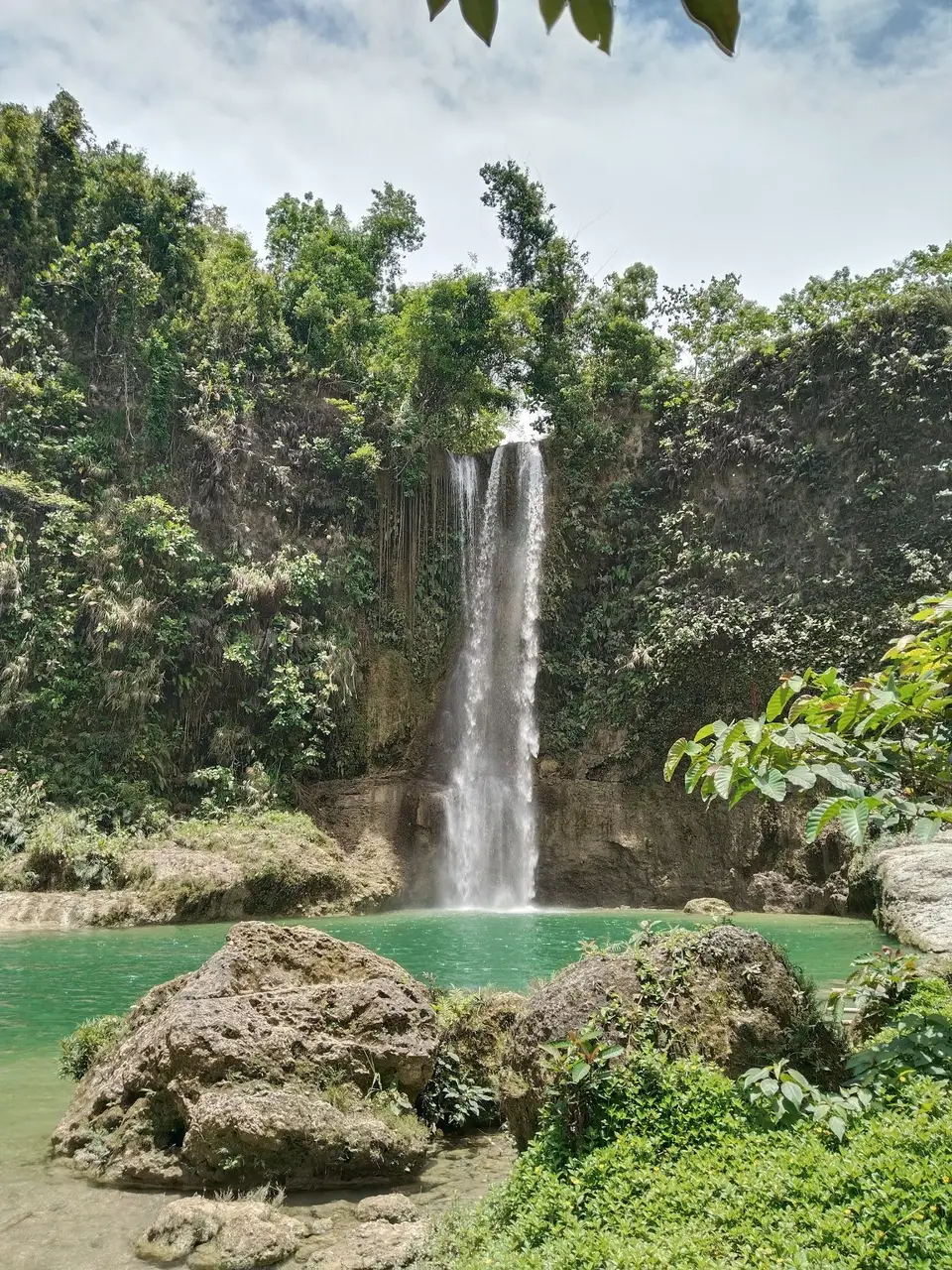
Located in the eastern municipality of Candijay, Can-Umantad Falls is the tallest waterfall in Bohol, cascading down a monumental rock face into a wide, refreshing pool framed by magnificent rice terraces.
Go beyond the usual tropical checklist and discover the complete Bohol experience — world-class diving, island hopping, waterfalls, wildlife, food, history, village life, beaches, sunsets, and hidden countryside escapes.
Bohol is one of the most complete, multifaceted islands in the Philippines. Travelers may arrive for white-sand beaches, island hopping, or the Chocolate Hills, but the island quickly reveals something deeper.
Ocean adventures, rural village economies, Visayan culture, Spanish-colonial architecture, and lush jungle landscapes all sit within easy reach. In a single day, you can dive with sea turtles at sunrise, explore geological landmarks in the afternoon, share a meal in a local eatery, and finish with live music along the shores of Panglao.
This guide is designed for curious travelers who want to move beyond overly commercial experiences and discover the living character of the island.
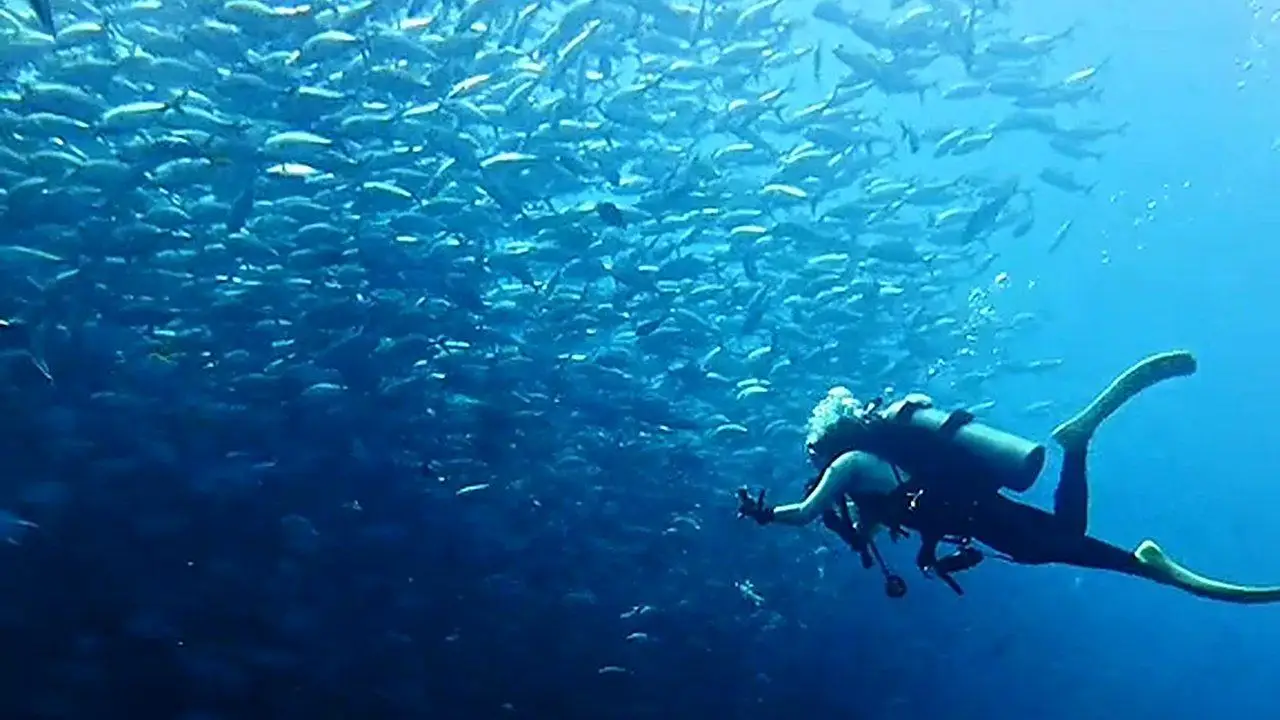
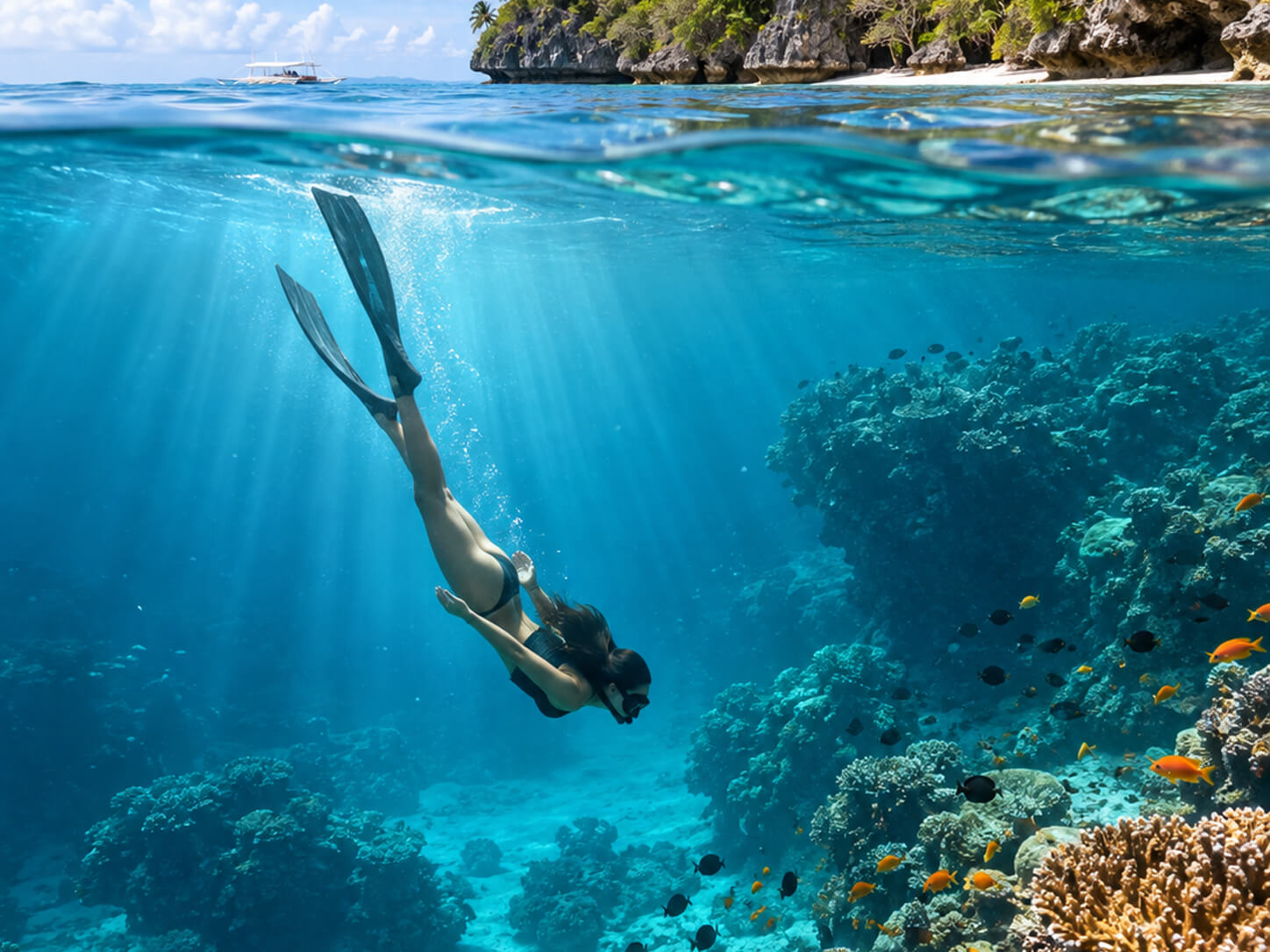
Scuba diving is arguably Bohol's greatest treasure. The province is globally renowned for its steep coral drop-offs, massive resident green sea turtles, swirling schools of jackfish, and exceptional macro biodiversity. Blessed with year-round warm water and gentle currents, it serves as an idyllic playground for both absolute beginners taking their first breaths underwater and seasoned divers looking for world-class technical walls.
While local house reefs directly off Panglao offer quick and effortless boat access, the crown jewels of the region lie slightly further afield.
Balicasag Island is a marine sanctuary legendary for its sheer vertical walls, healthy coral gardens, and nearly guaranteed encounters with dozens of sea turtles and massive, glittering schools of barracuda and jacks.
Pamilacan Island offers a wilder, more remote, and deeply tranquil island atmosphere. It features dramatic sloped reefs swept by currents, healthy hard coral cover, and a rich history of community-led marine conservation.
Napaling is famous among divers and freedivers alike for its dramatic, easily accessible wall right off the cliffside, where a massive resident sardine run pulses and shifts just beneath the surface.
Whether you explore the shallow gardens of Doljo or the dramatic current drifts of Arco and Momo Beach, exploring our underwater world consistently stands out as the ultimate highlight of any Bohol adventure.
👉 Plan your underwater adventure: Explore our comprehensive directory of Diving in Bohol and check out the best local spots in our Panglao Diving Guide.
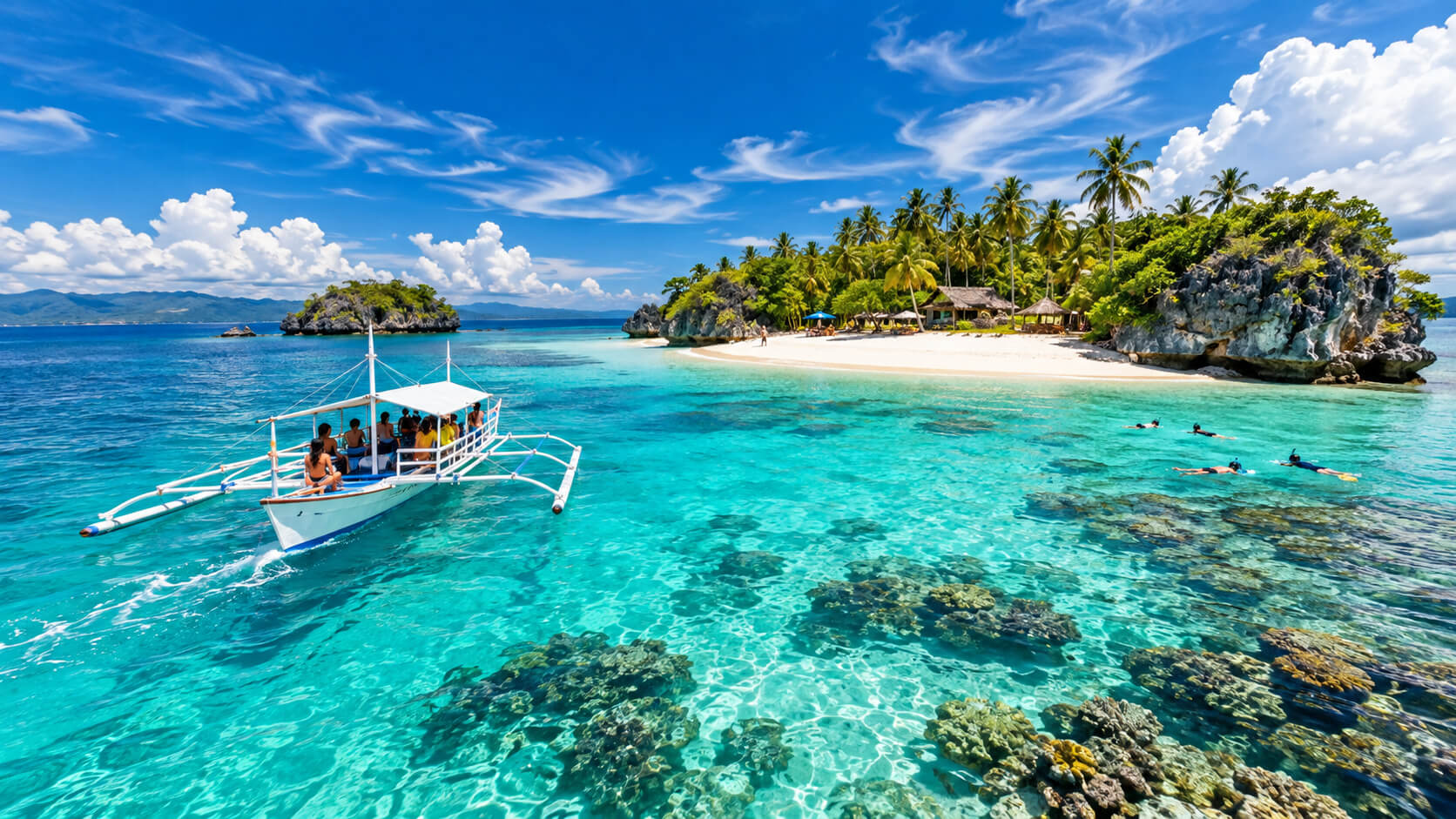
To truly understand the oceanic lifestyle of the Visayas, you have to leave the mainland behind on a traditional bangka—the native outrigger wooden boats that have navigated these waters for generations. Island hopping gives you a radically different perspective of Bohol's coastal geography, taking you across vast stretches of turquoise water to remote fishing communities, isolated sandbars, and pristine snorkeling zones.
Standard excursions generally focus on a mix of marine exploration and beach relaxation. A typical morning kicks off early at dawn to watch pods of wild dolphins leaping across the Bohol Sea, followed by dedicated snorkeling stops along the shallow marine sanctuaries surrounding Balicasag. Most trips include a peaceful midday stroll along the shifting sands of Virgin Island—a stunning, curved sandbar that emerges beautifully from the clear waters at low tide.
The most rewarding island tours are those that avoid the chaotic mass-tourism rush. By choosing responsible operators who employ local coastal fishermen as guides, your boat journey transforms from a simple photo-op into a profound, respectful encounter with the local maritime culture.
👉 Discover the islands: Pair your ocean days with our signature, fully guided Bohol Island Tour to explore the mainland.
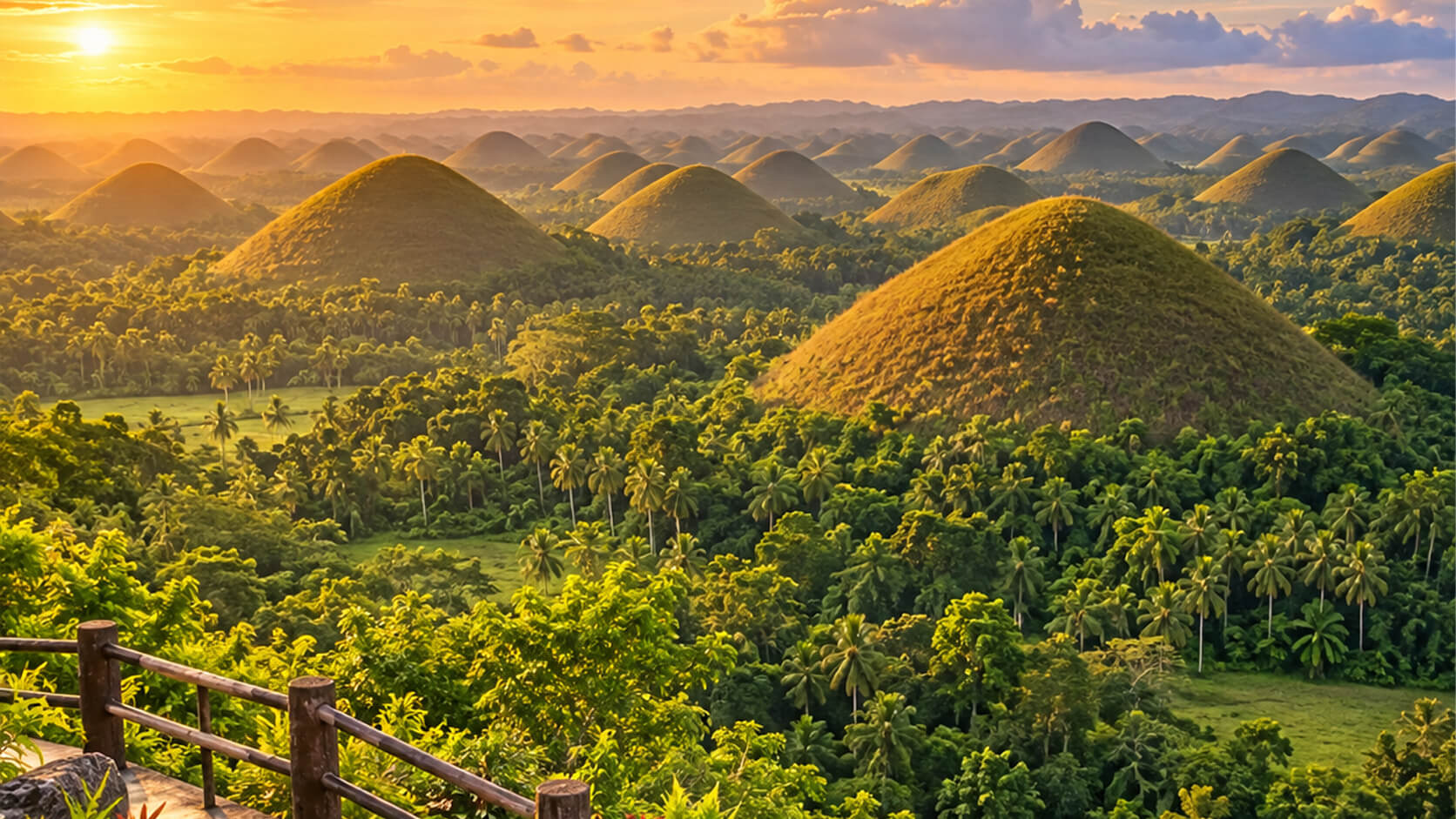
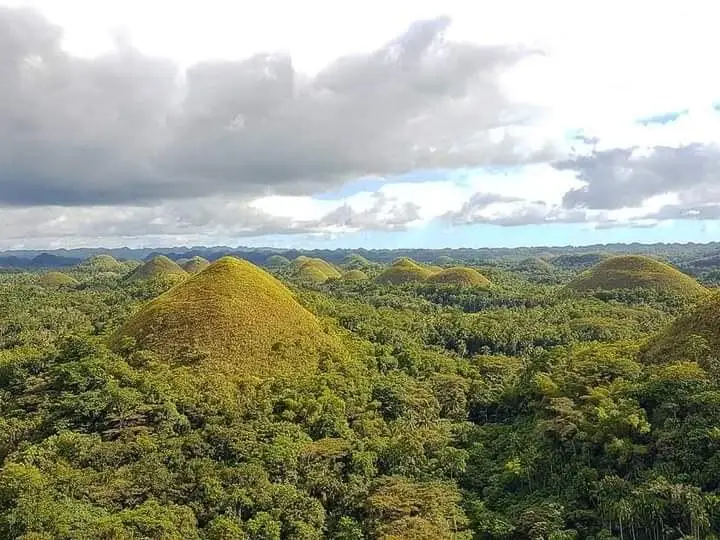
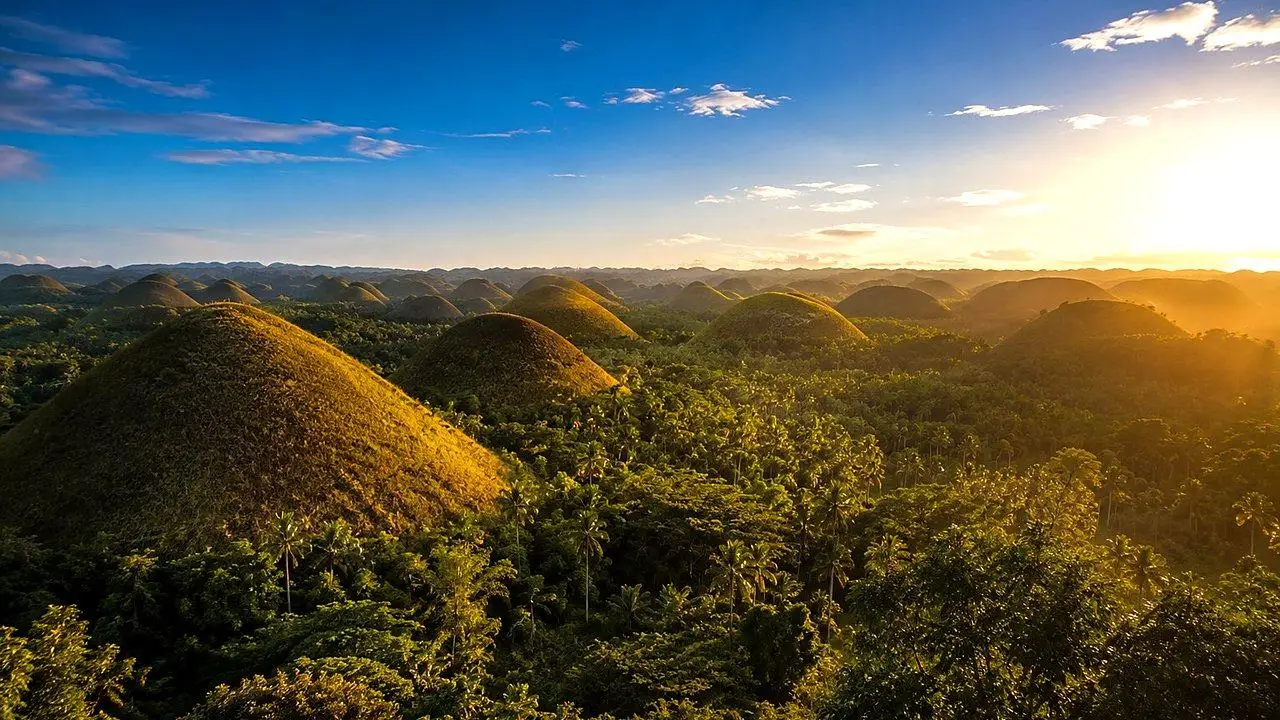
The Chocolate Hills are the undisputed geographic symbol of Bohol. This surreal landscape is comprised of more than 1,200 perfectly symmetrical, conical limestone hills rising uniformly across the island’s interior valleys. Covered in lush grass throughout the monsoon season, the hills dry out completely during the peak dry months, turning a deep, rich cocoa-brown that gives them their famous name.
Scientifically, these hills are the remnants of ancient marine limestone deposits shaped by millions of years of rainfall and erosion. Culturally, they are the source of beautiful Boholano myths—most famously the tale of two battling giants who hurled boulders and sand at each other for days, leaving behind a chaotic, beautiful mess.
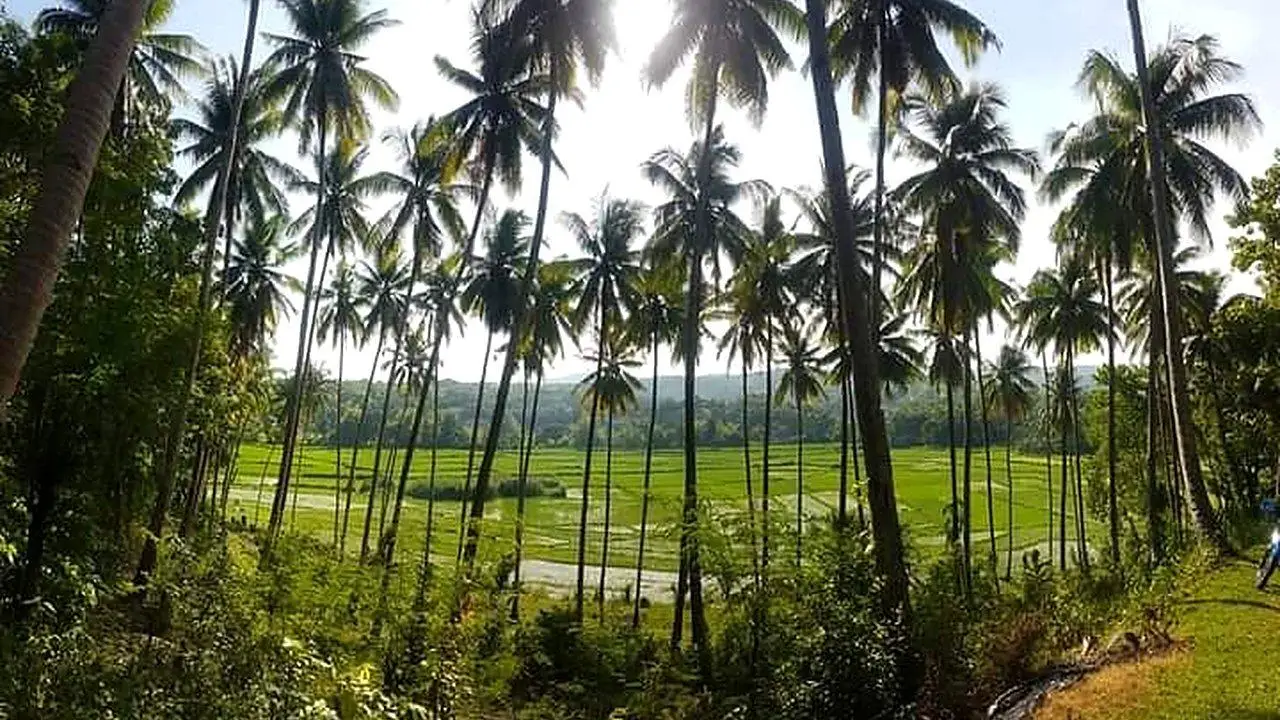
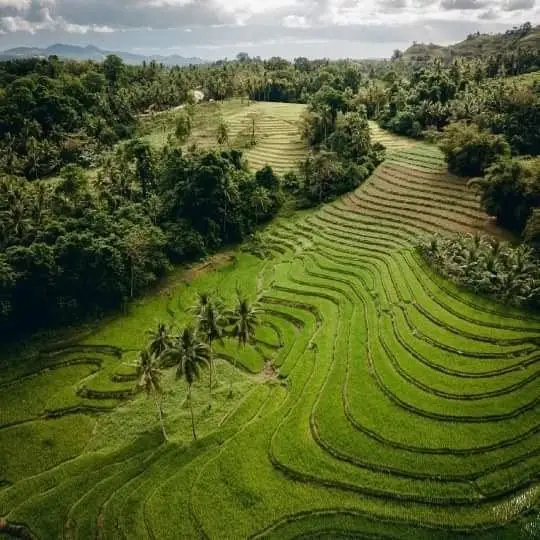
However, the magic of the Chocolate Hills lies just as much in the journey as the destination. The drive inland from the coast takes you through an enchanting cross-section of rural life. You will cruise down peaceful jungle highways, pass through traditional agricultural villages, and catch glimpses of local farmers tending to emerald-green rice paddies with the help of water buffalo, providing an authentic look at the island's slow agricultural rhythm.
👉 Uncover the legends: Learn how these geological wonders shaped the province's identity in our deep dive into Bohol History.
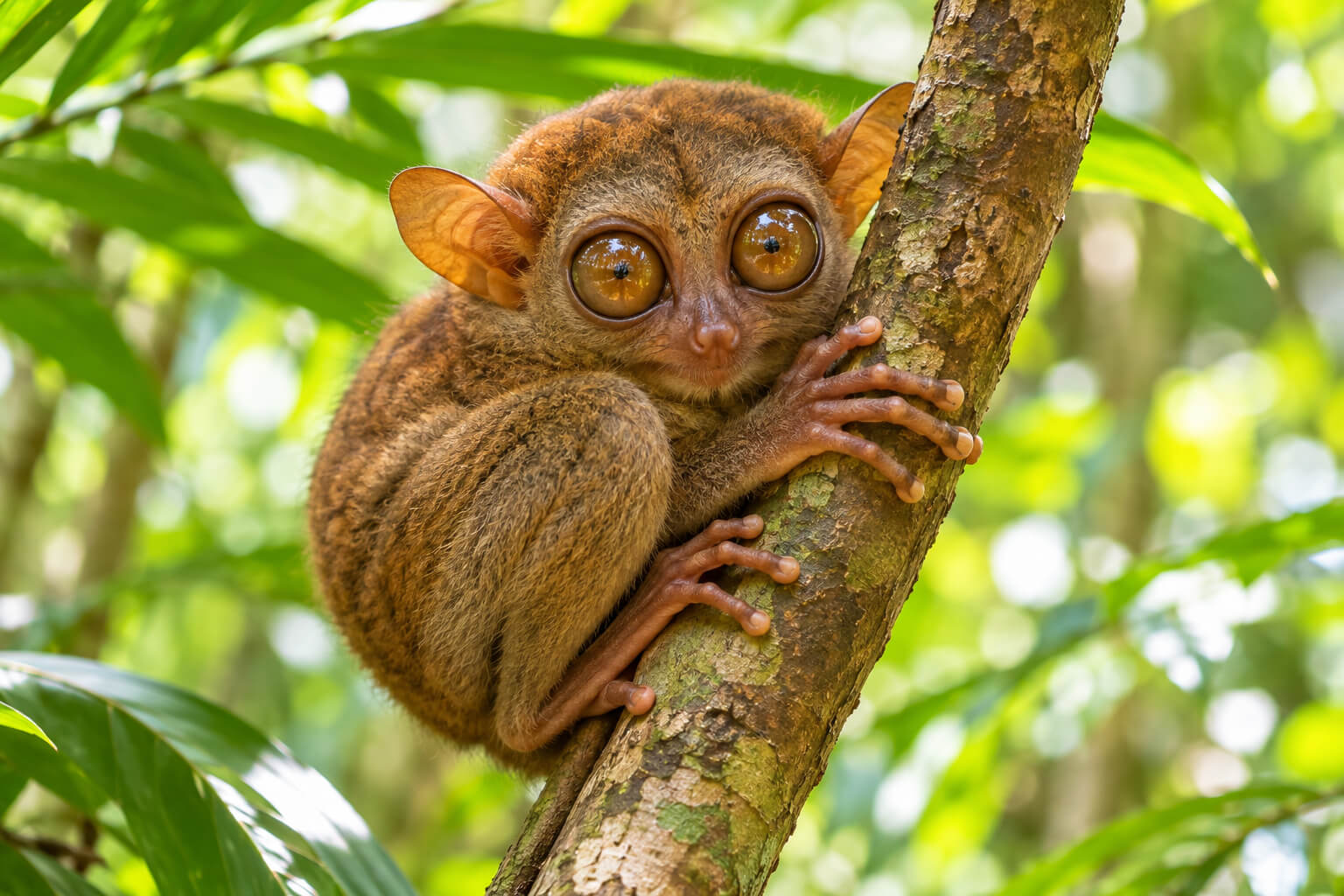
Seeing a Philippine tarsier up close is an incredibly moving wildlife encounter. This minuscule, nocturnal primate—roughly the size of a human fist—is famous for its disproportionately massive golden eyes, elongated ankle bones that allow it to make silent, acrobatic leaps through the jungle undergrowth, and a soft, velvety gray coat.
Because tarsiers are evolutionary marvels that are highly sensitive to their environment, visiting them requires strict ethical awareness.
Bohol's lush, mountainous interior acts as a massive natural watershed, concealing an array of spectacular waterfalls deep within its tropical rainforests. Venturing inland to locate these hidden swimming spots offers a cooling, adventurous escape from the midday coastal heat, steering you far away from commercial beach clubs into raw, untamed nature.
Depending on which direction you ride, several distinct falls deserve a spot on your route.
Located in the eastern municipality of Candijay, Can-Umantad Falls is the tallest waterfall in Bohol, cascading down a monumental rock face into a wide, refreshing pool framed by magnificent rice terraces.
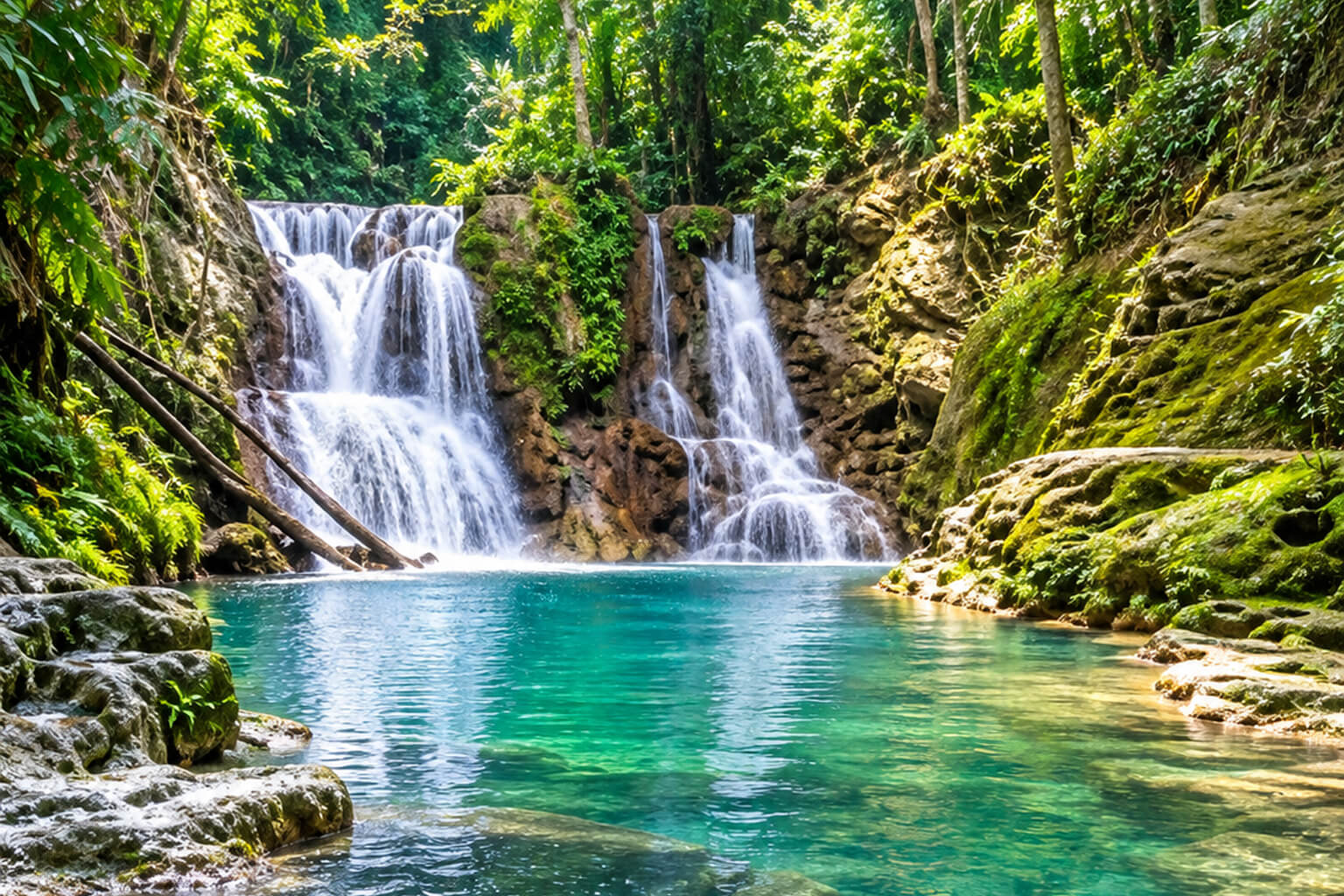
Mag-Aso Falls is a twin-drop waterfall hidden in the forest of Antequera, renowned for its brilliant, milky-turquoise pool and surrounding limestone cliffs wrapped in dense ferns.
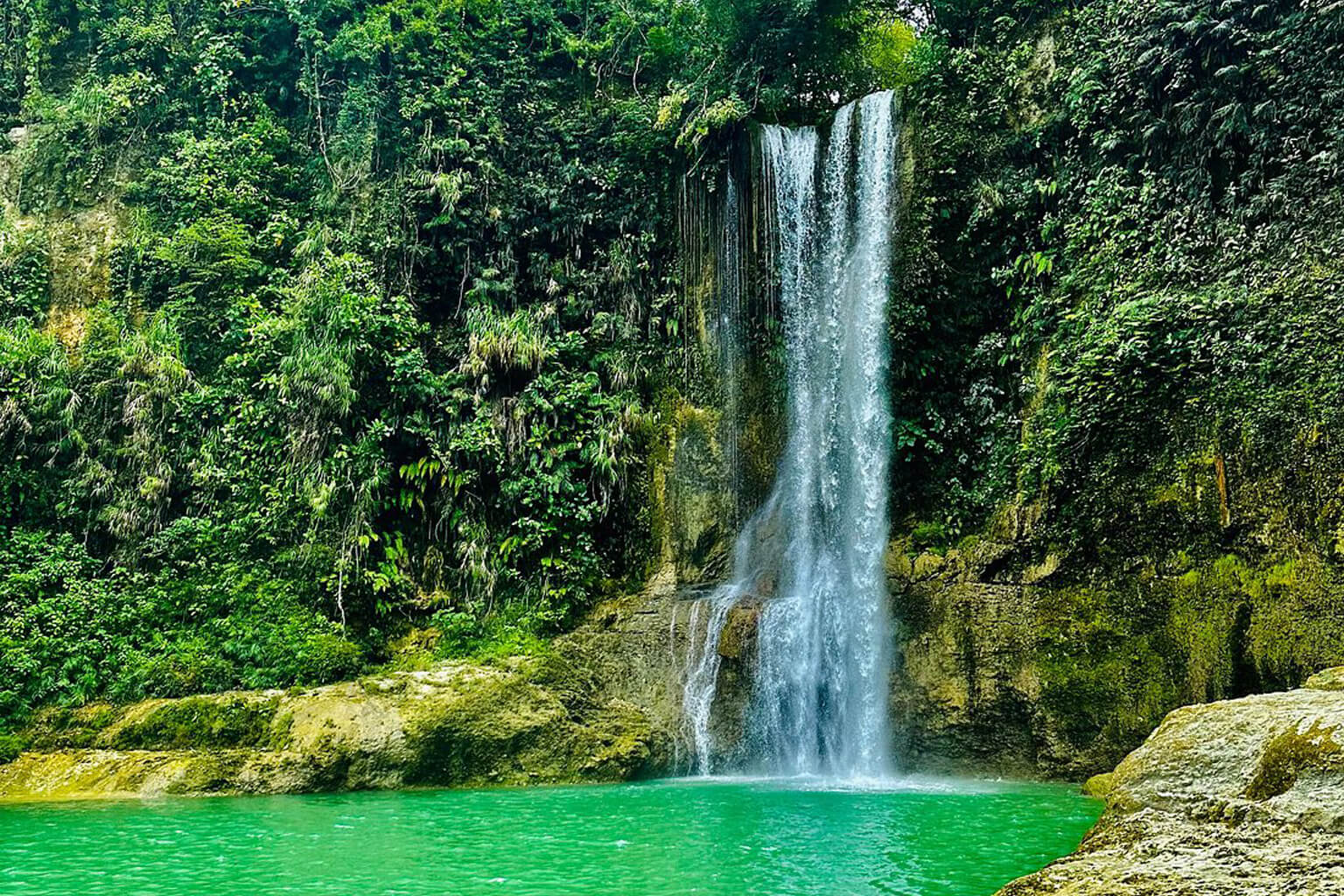
Camugao and Pangas Falls are quiet, lesser-visited local favorites that offer a deeply peaceful atmosphere, perfect for slow afternoons spent swimming alongside village kids and enjoying the quiet jungle scenery.
The journeys to these falls are frequently just as memorable as the pools themselves, involving short hikes down steep forest staircases, river crossings, and panoramic views of Bohol's untouched highlands.
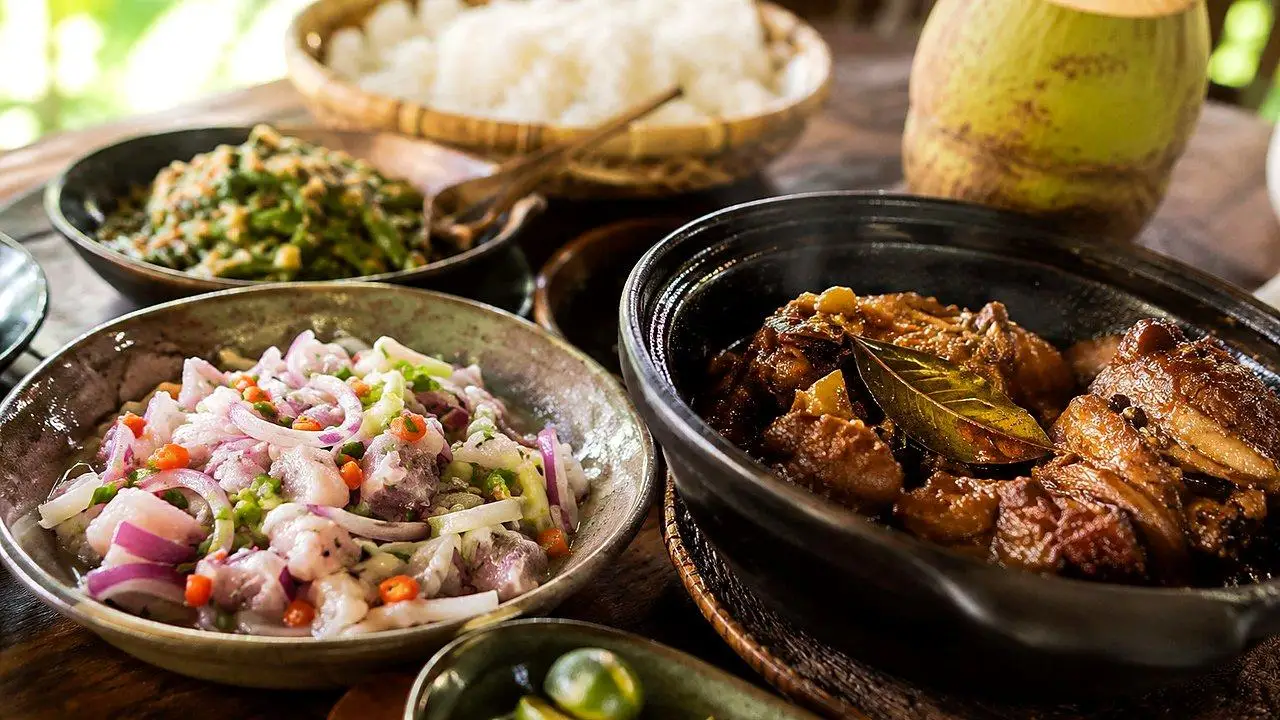
Food is the ultimate window into the soul of Filipino hospitality and domestic culture. Visayan cuisine avoids the heavily spiced profiles of neighboring Asian countries, focusing instead on a masterful balance of sour, salty, sweet, and deeply savory notes achieved through slow braising, open-fire grilling, and local vinegars.
While Panglao features excellent international dining options, the most unforgettable meals on the island are found in carinderias or bustling public markets.
For memorable meals, look beyond international resort restaurants and try carinderias, markets, and family-run local spots.
The true beauty of Bohol doesn't reside in its geographic landmarks; it lives entirely within its people. Filipino culture is distinctively warm, social, and deeply anchored in family life.
If you take the time to slow down and observe everyday life away from the heavy tourist zones, you will notice a unique, joyful rhythm. You will see makeshift basketball courts hosting passionate village tournaments, families gathered outside their homes sharing laughter, children playing in fields, and the inevitable sound of evening karaoke drifting through the palm trees.
Culture here is not something frozen behind glass in a museum; it is a living, breathing experience found in a polite conversation with a tricycle driver, an exchange of smiles at a village market, or the vibrant energy of a local fiesta.
👉 Deepen your knowledge: Learn more about the island's traditions and cultural roots in our Bohol History Guide.
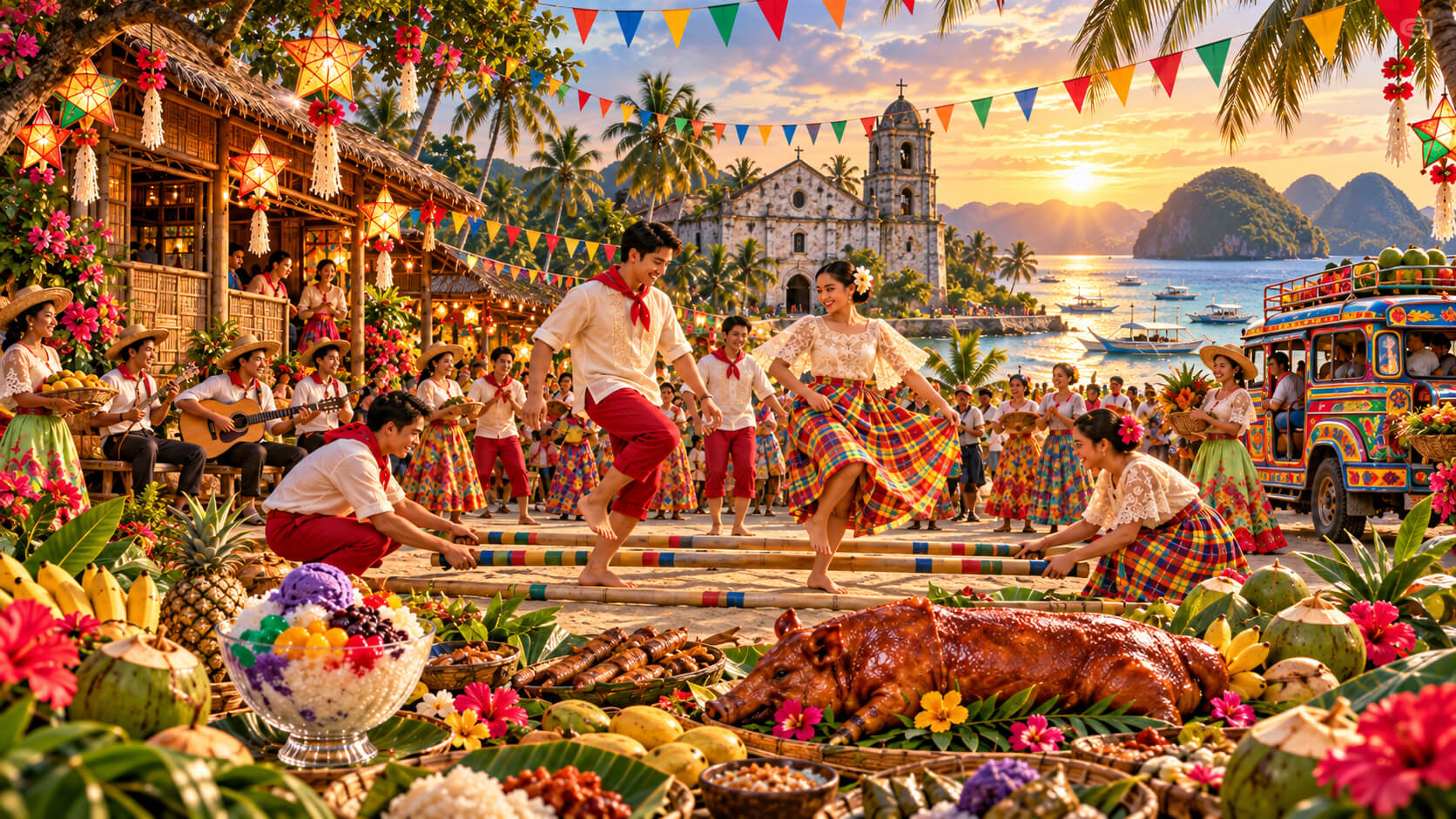
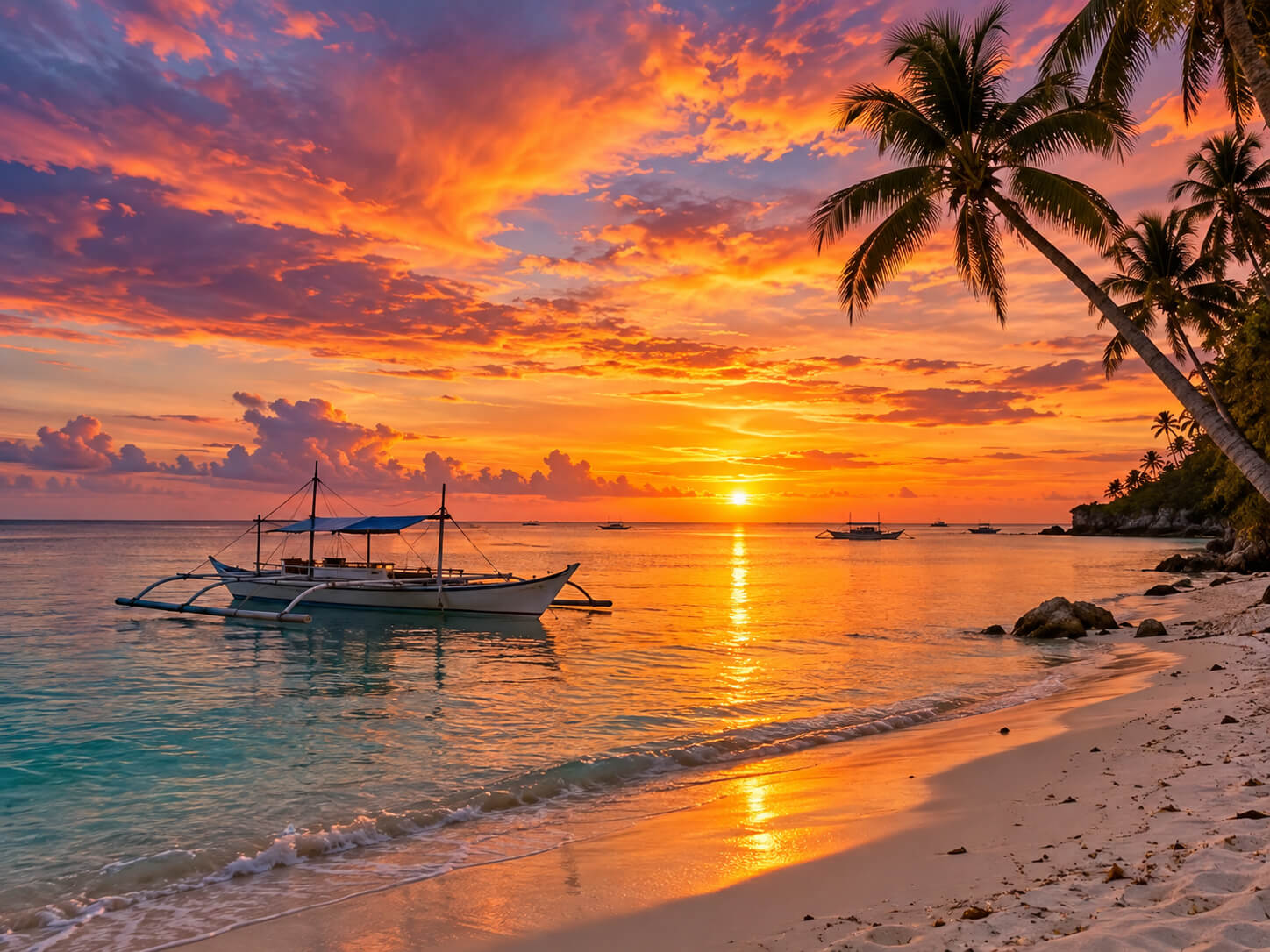
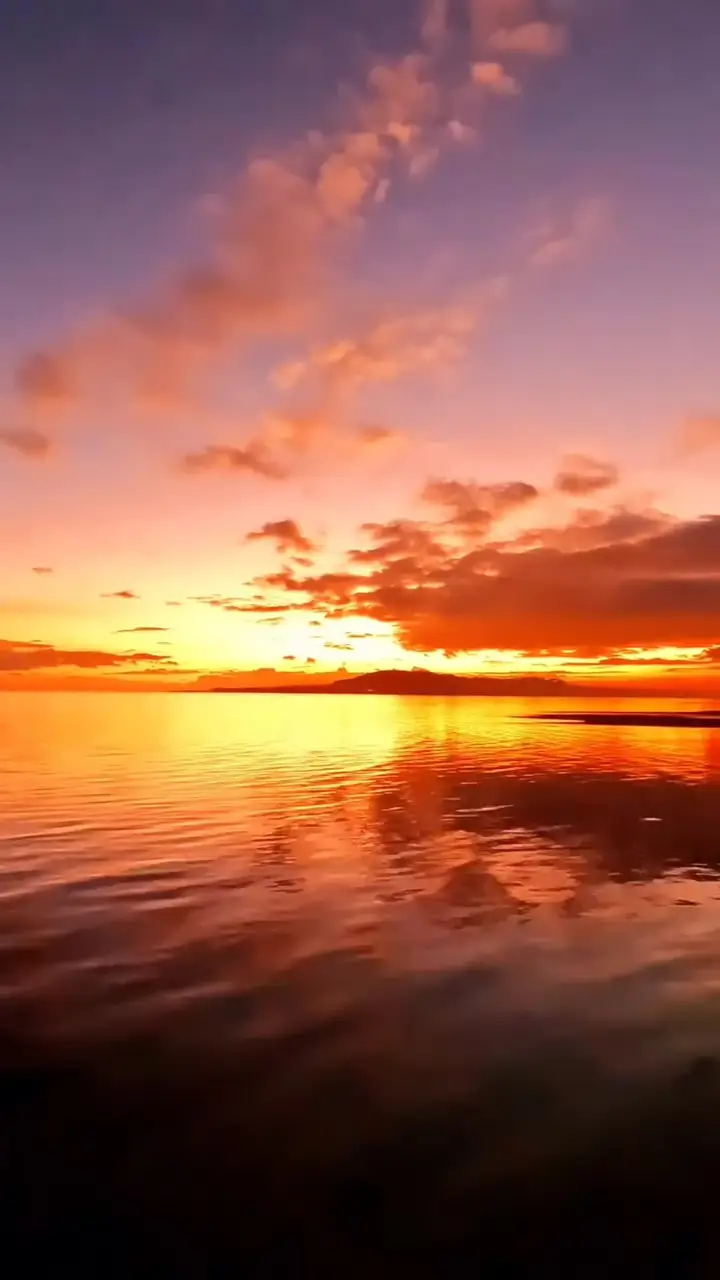
As daytime adventures come to an end, the island slows down for one of its most consistent daily rituals: the tropical sunset. Thanks to its southwestern orientation, the coastline of Panglao offers spectacular, uninterrupted sunset vistas, with the sky regularly transforming into a canvas of violet, orange, pink, and gold.
A few excellent ways to experience this peaceful time of day include taking a quiet barefoot stroll along Doljo Beach, enjoying a cold drink on Dumaluan Beach, or sitting quietly on the sand after a long day of scuba diving while the traditional outrigger boats anchor against the horizon.
It is during these quiet transitions between day and night that the frantic pace of travel completely slips away, and Bohol transitions from a travel destination into a lasting memory.
If you are looking for energy, social interaction, and entertainment after dark, Alona Beach is the undisputable epicenter of Bohol's nightlife. This vibrant beachfront strip comes alive at night, illuminating the coastline with string lights, lively beach bars, international restaurants, and open-air cafés.
Depending on the evening, Alona offers reggae bands, acoustic music, fire-dancing performances, and tropical cocktails directly beside the waves. However, Alona can get busy and loud during peak season. If you prefer tranquility, stay in quieter areas like Bolod or Danao and commute into Alona only when you want evening energy.
👉 Find your perfect base camp: Check out our curated list of the best Resorts and Hotels in Bohol.
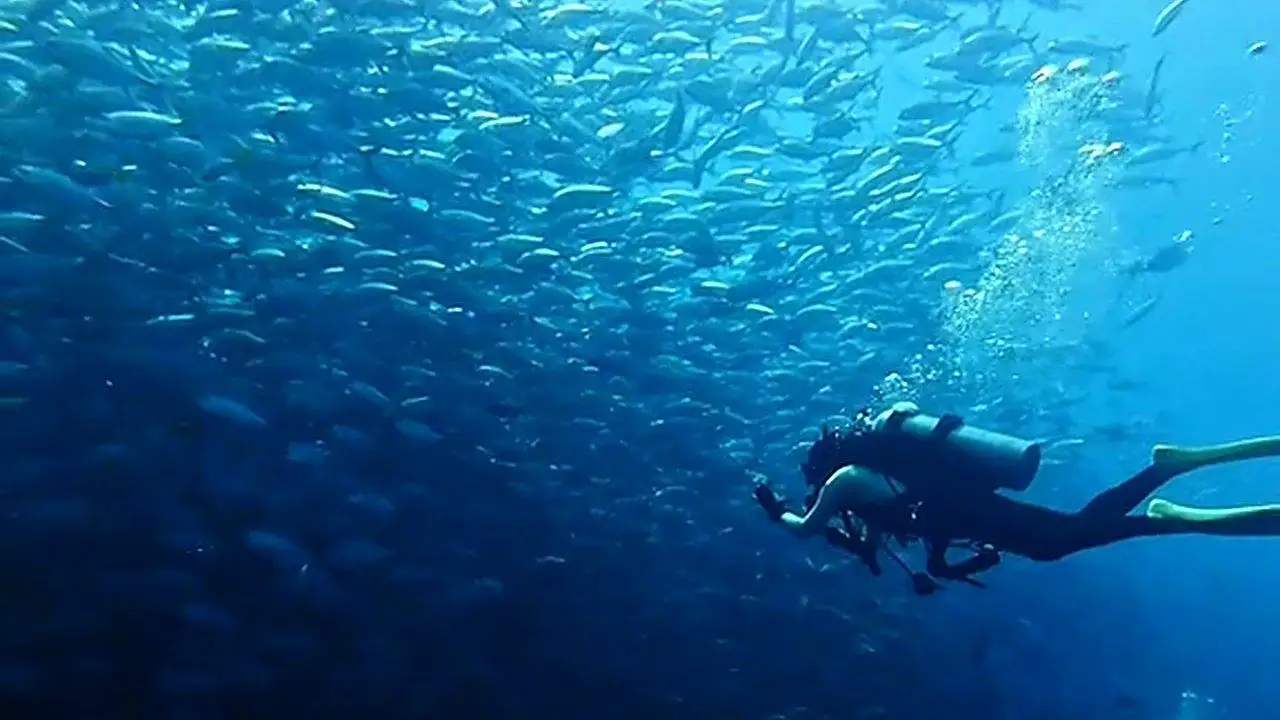
In recent years, the deep blue waters surrounding Panglao have emerged as one of the premier freediving hubs in Southeast Asia. Unlike scuba diving, freediving is the art of exploring the ocean on a single breath of air, focusing on internal calm, breath control, relaxation, and streamlined underwater movement.
Panglao is exceptionally well-suited for freediving because the shallow coral shelf drops into deep, calm blue water protected from heavy open-ocean swells. This creates predictable training conditions with excellent visibility and warm water year-round.
Many travelers take a beginner certification course here to challenge themselves, learn safe breathing physiology, or capture natural photographs along the deep walls of Napaling beside thousands of schooling sardines.
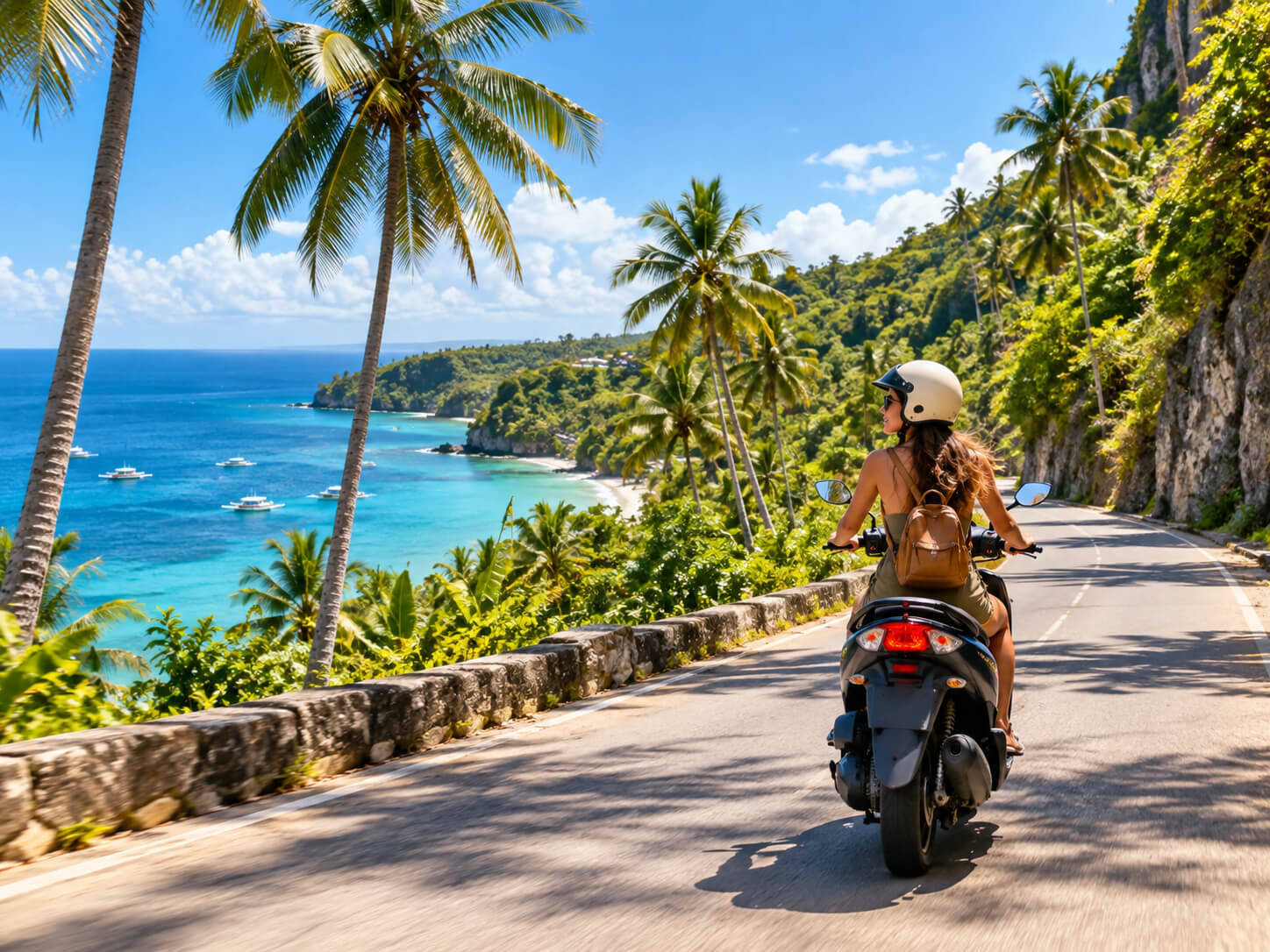
For independent travelers, renting a scooter is the ultimate way to unlock the true geographical diversity of Bohol. With a scooter, you are no longer bound to a rigid tour bus schedule; you have freedom to stop at agricultural viewpoints, explore interior roads, pull over at fruit stands, and discover hidden beaches.
However, navigating the island on two wheels demands focused attention and defensive driving habits. Philippine roads are dynamic and require you to adapt quickly.
If you do not have significant scooter experience, it is safer to skip the rental and hire a private driver or join an organized van tour.
👉 Stay safe on the road: Read our practical safety and logistics advice in our Bohol Travel Tips.
Bohol possesses some of the most significant Spanish colonial architecture and historic religious heritage in the Philippines. Constructed primarily out of coral stone, these heritage structures document centuries of European colonization, local resistance, and cultural evolution.
Without guidance, these locations can look like simple weather-worn buildings. But with historical context, they transform into living monuments detailing the cultural fusion of the Filipino people.
👉 Explore the colonial past: Discover the full story behind these stone monuments in our dedicated Bohol History Guide.
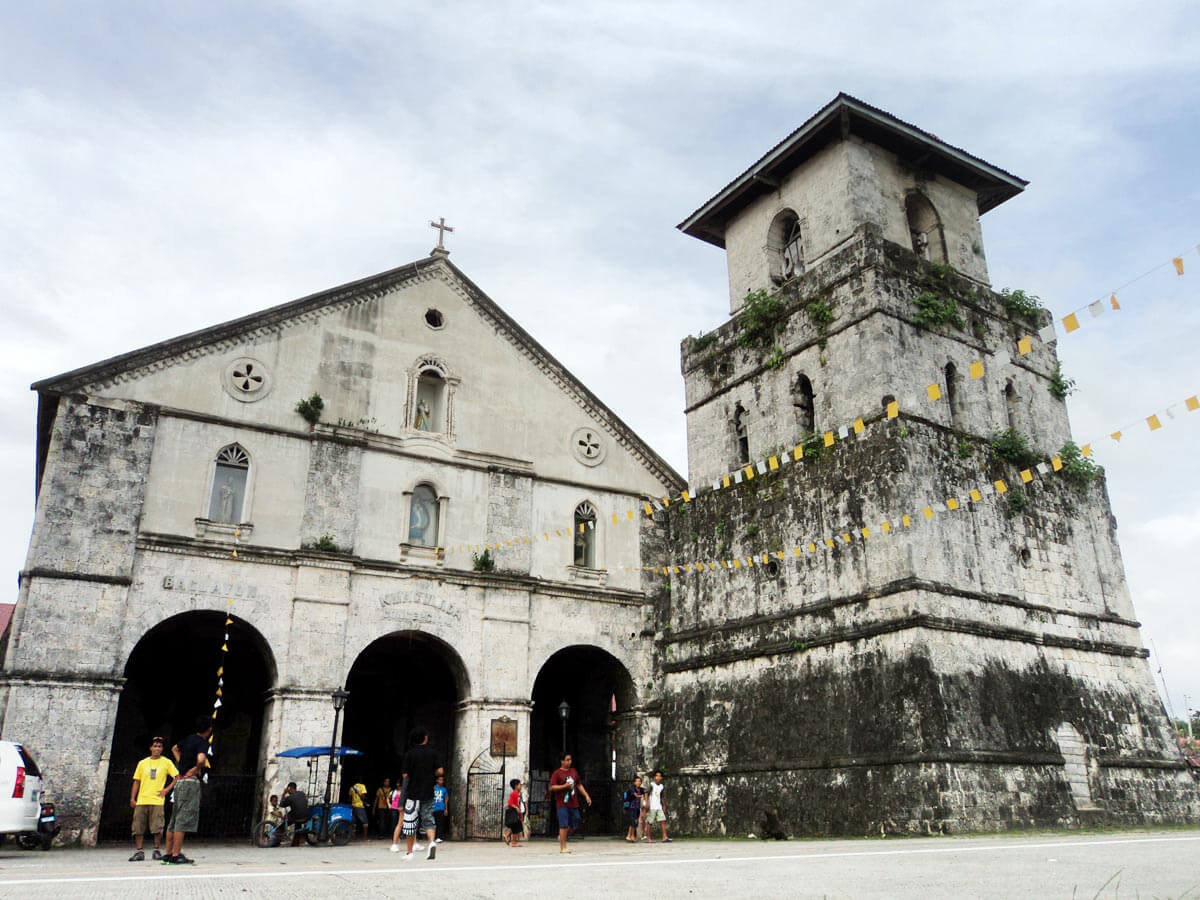
Baclayon Church is one of the oldest stone churches in the archipelago, housing sacred colonial art and religious artifacts.
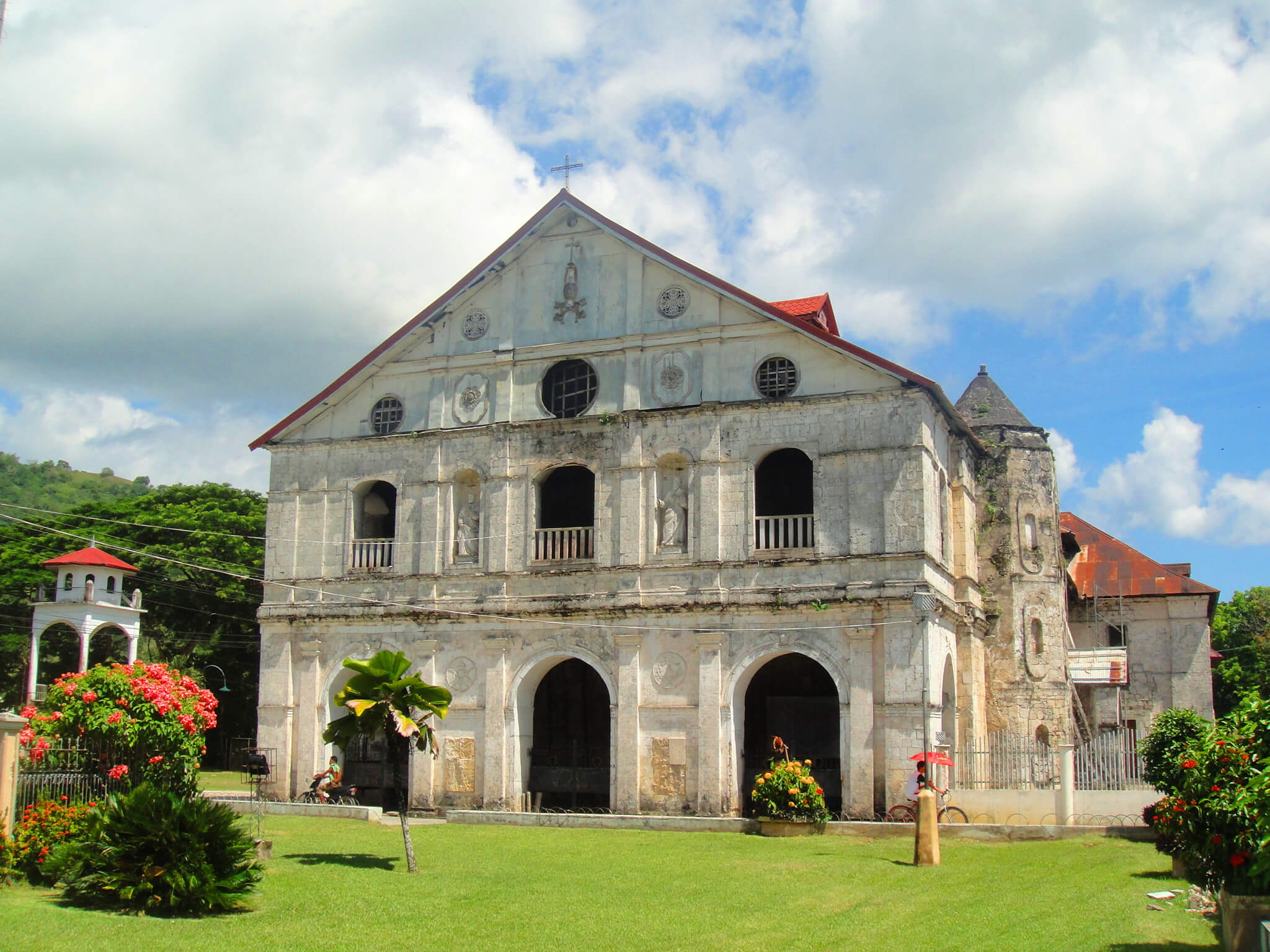
Loboc Church sits along the banks of the emerald Loboc River and represents a fascinating example of historical engineering and resilience.
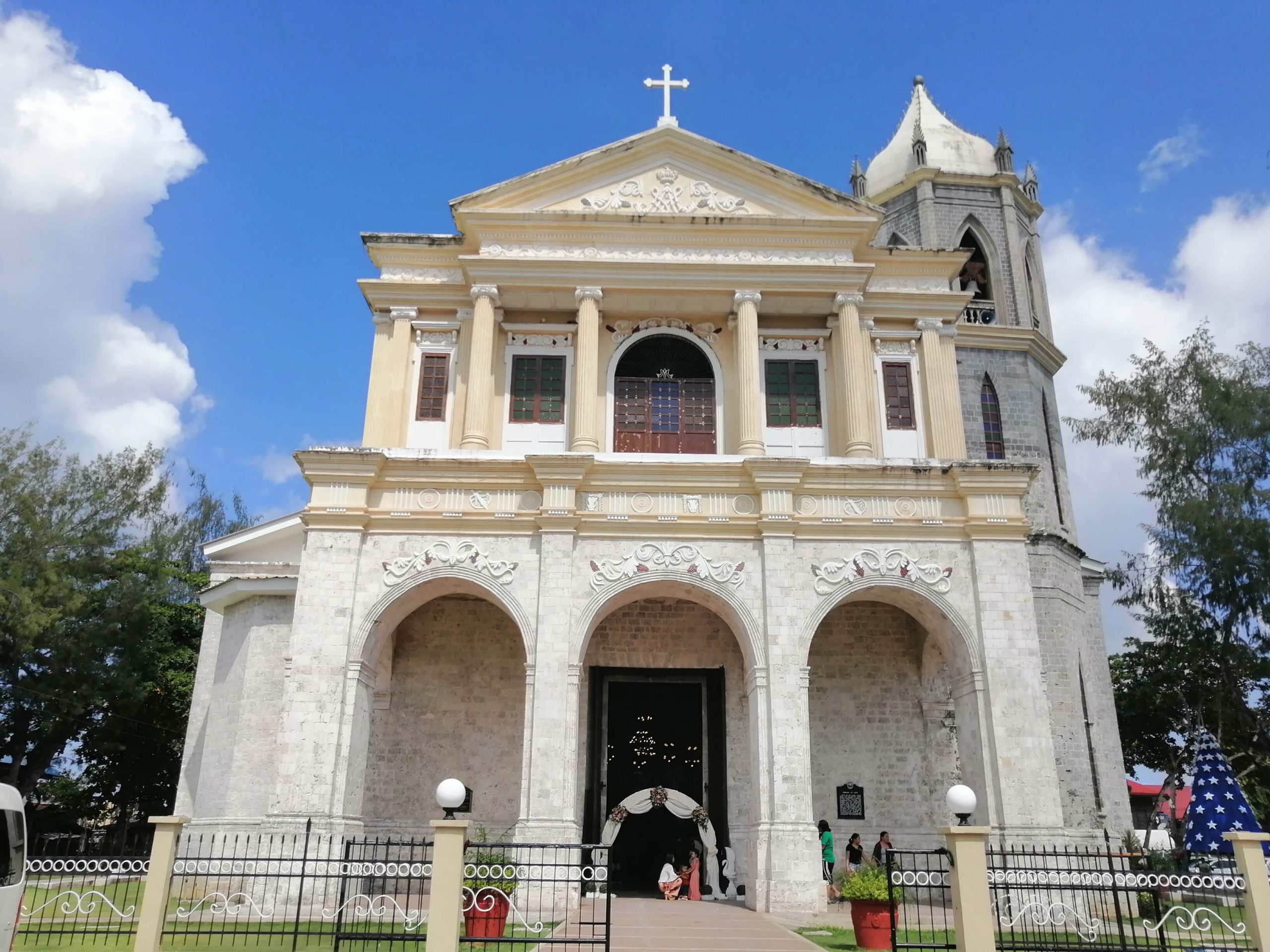
Dauis Church is situated on the northern coast of Panglao Island and is famous for its ceiling frescoes and a legendary freshwater well.
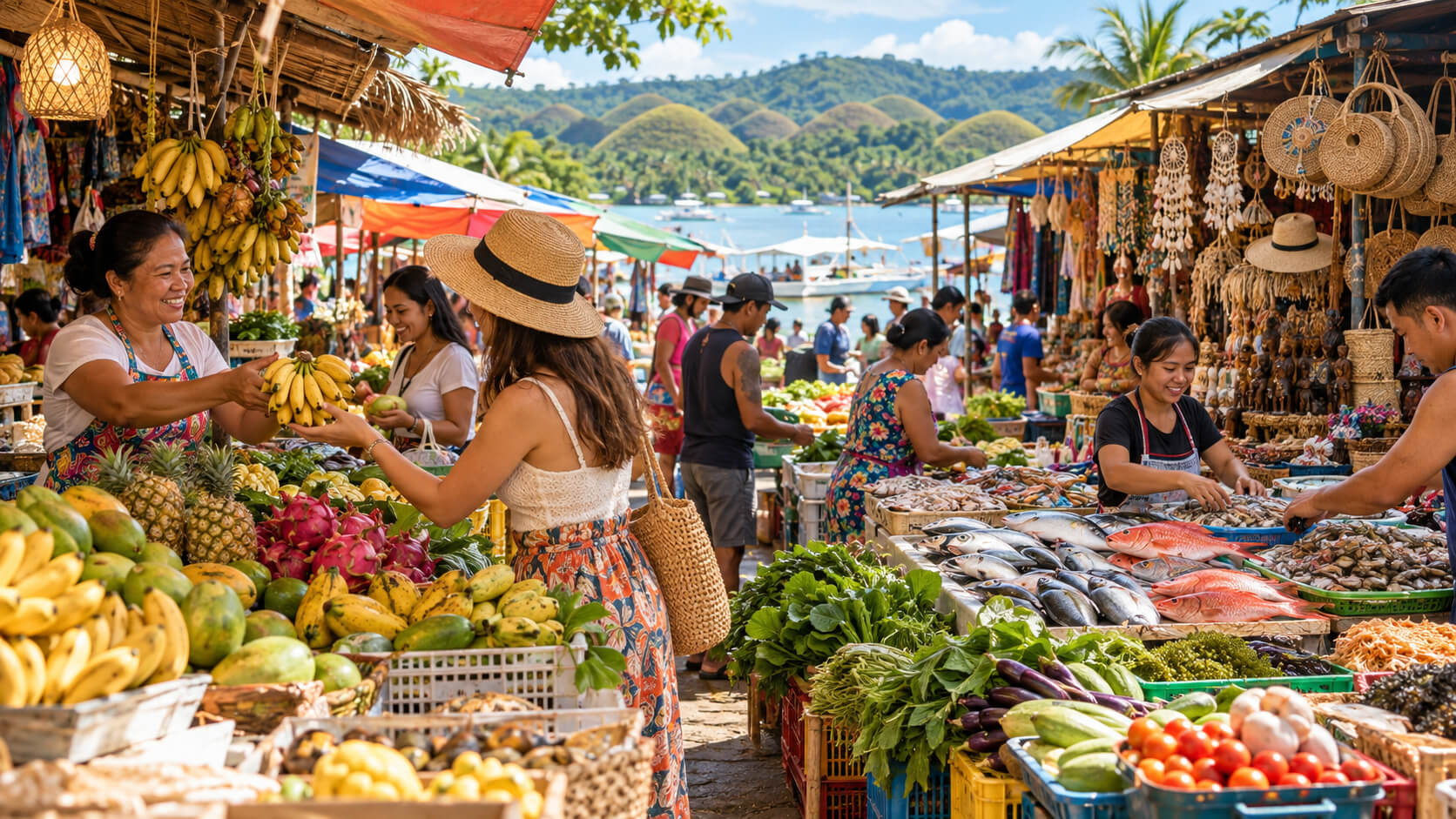
If you want to experience Bohol at its most raw and unedited, step away from convenience stores and spend a morning inside a municipal public market. This is where real island life unfolds at a furious pace.
Markets are vivid sensory experiences filled with tropical fruits, freshly caught fish, local vendors, rice cakes wrapped in banana leaves, and honest moments of daily life far removed from the polished look of beachfront resorts.
👉 Immerse yourself locally: We explore these authentic trade hubs during our personalized Bohol Island Tour.
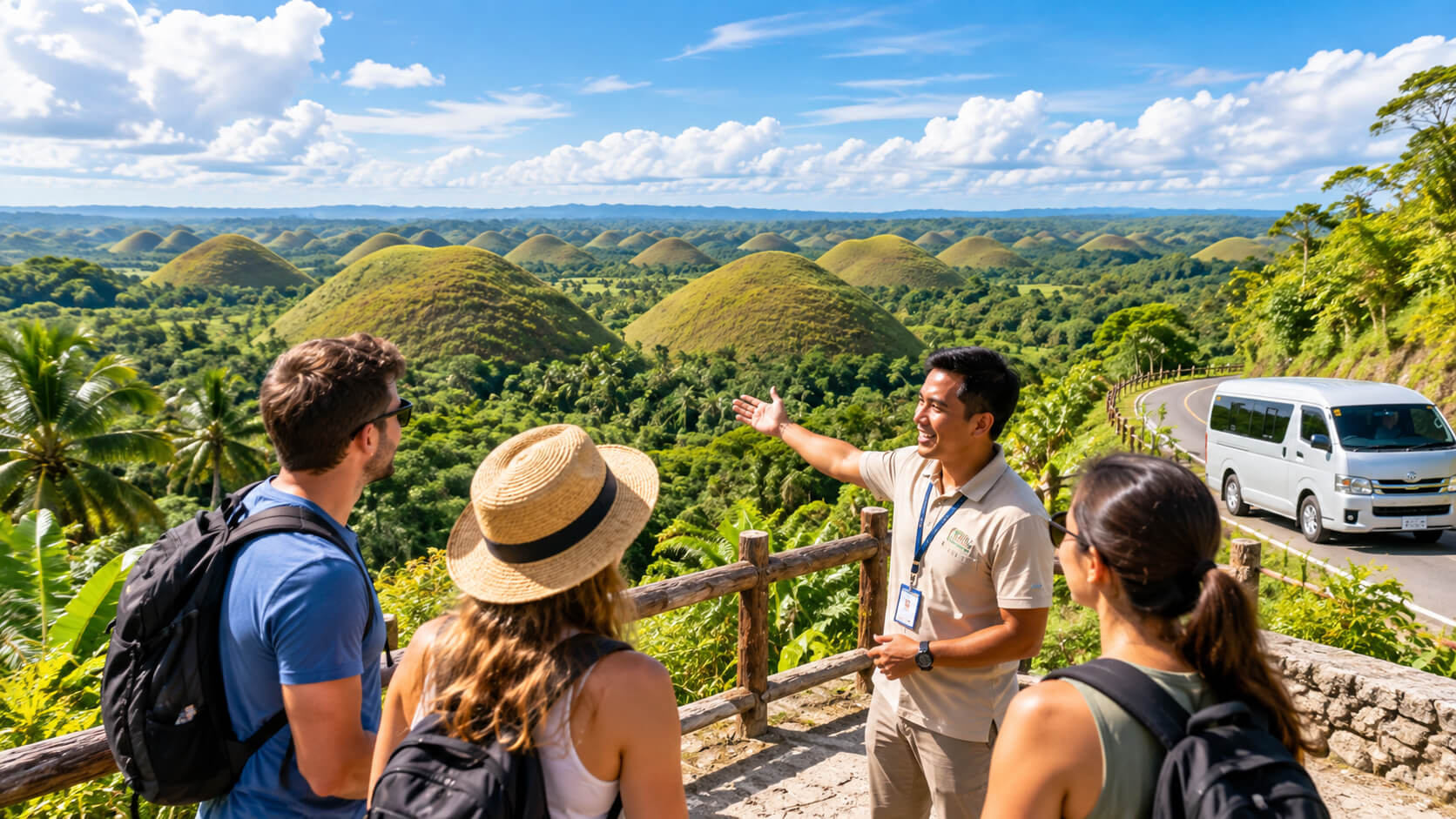
Taking a guided mainland tour is the most efficient way to connect Bohol's inland attractions. However, there is a major difference between transport service and true guided cultural touring.
A premium guided tour changes your travel experience. With a knowledgeable local guide, your day becomes a narrative journey. As you move across the island, your guide shares the history of the Visayas, explains rural farming life, breaks down regional food traditions, and reveals the deeper meaning behind centuries-old landmarks.
👉 Book your cultural guide: Secure your spots for our highly-rated Bohol Island Tour.
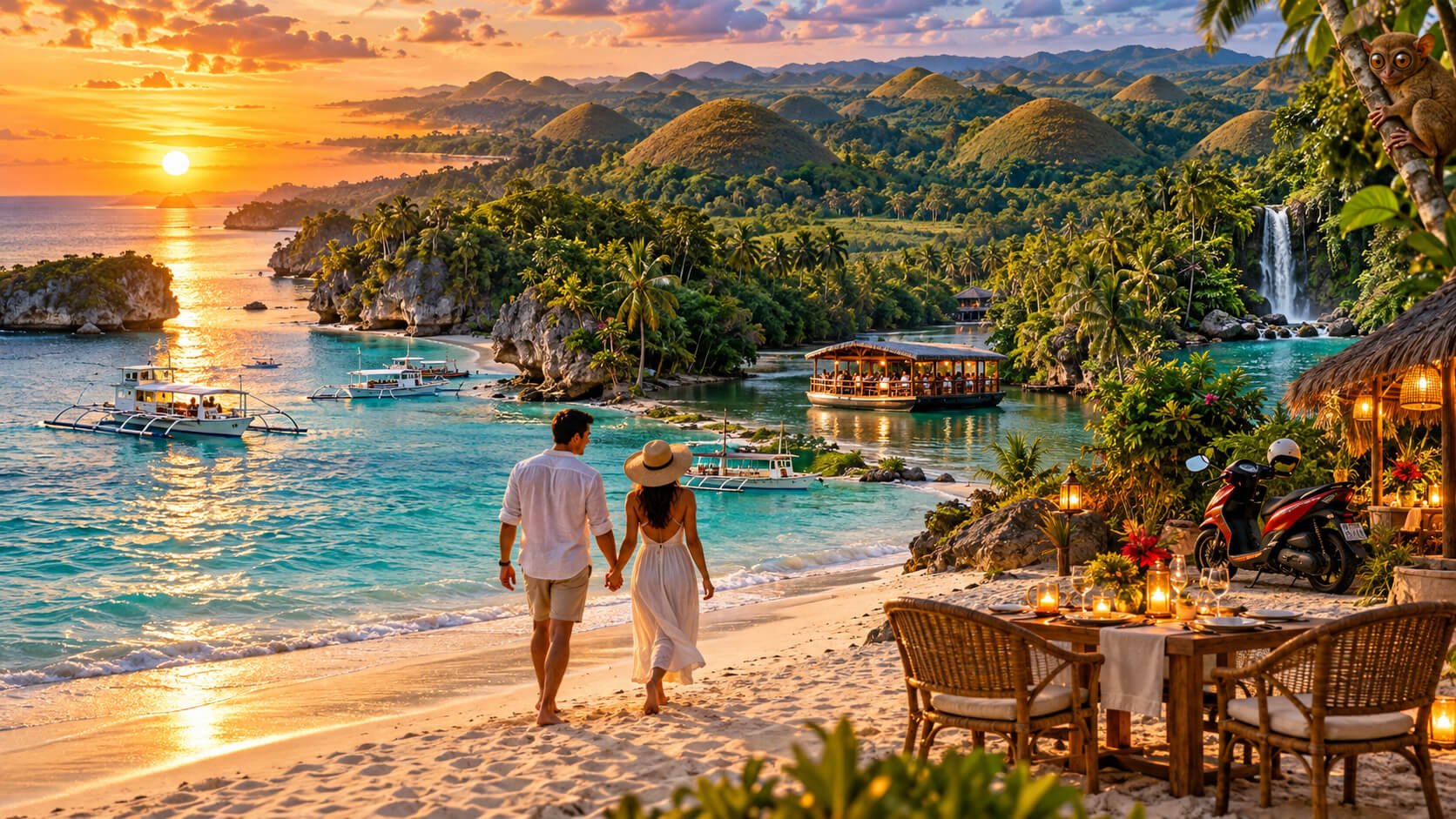
Bohol is a spectacular destination for couples, balancing tropical romance, outdoor adventure, and deep relaxation. Unlike some party islands, Bohol maintains a laid-back, naturally beautiful atmosphere that suits honeymoons, anniversaries, and slow romantic getaways.
Memorable experiences for couples include a private beachfront dinner on Dumaluan Beach, a private outrigger boat trip to Pamilacan Island, or learning to dive together.
👉 Plan your romantic getaway: Browse the most romantic beachfront properties in our Bohol Accommodation Guide.
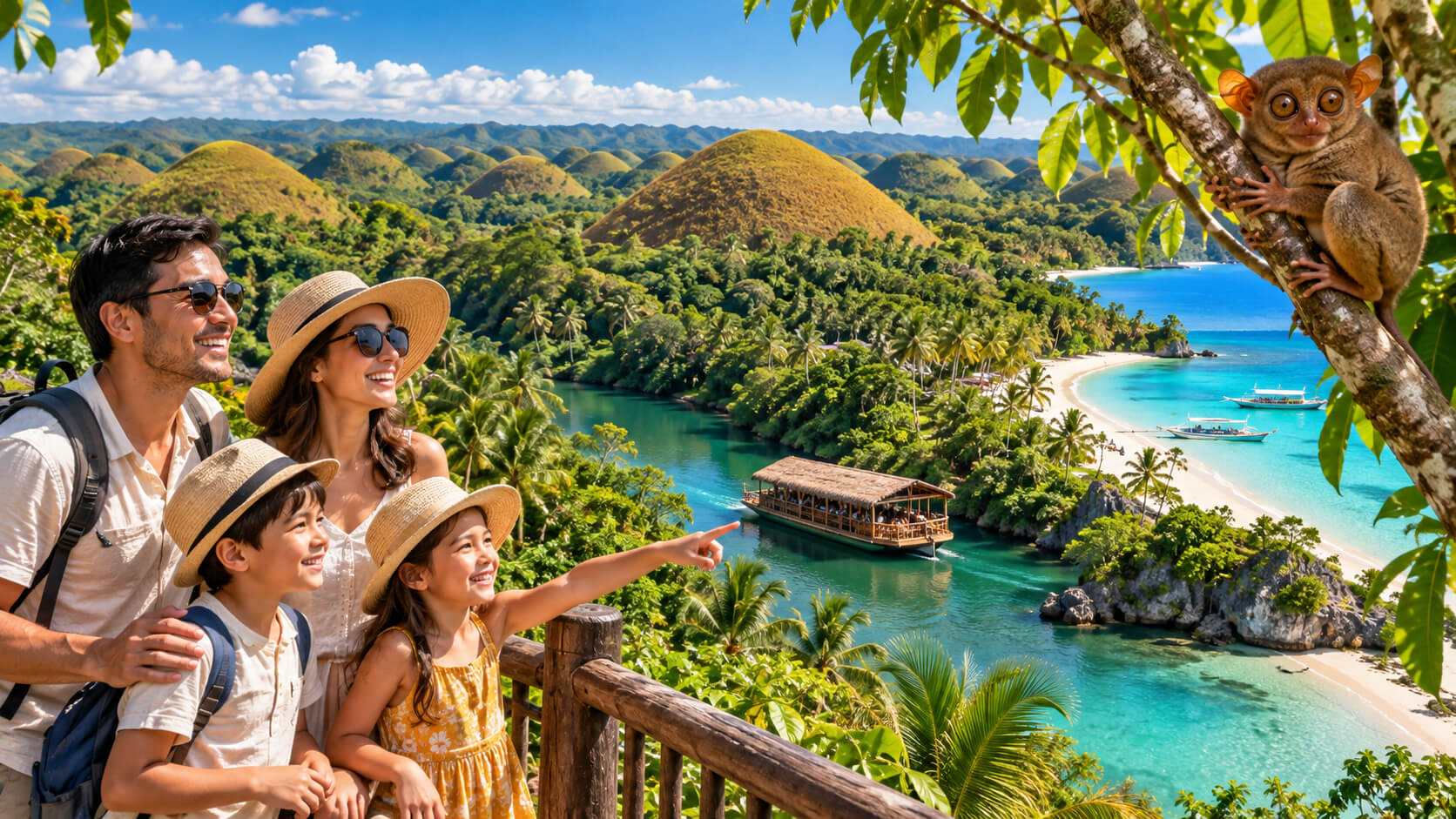
Bohol is an incredibly welcoming, safe, and diverse playground for families traveling with children. The island's core attractions offer a mix of fun, outdoor activity, and educational experiences.
Top family-friendly highlights include the Tarsier Sanctuaries, Chocolate Hills, the calm waters of Dumaluan Beach, and organized countryside van tours.
For photographers and content creators, Bohol offers a diverse palette of dramatic landscapes, striking architecture, and vibrant colors. The most captivating images are often the ones that capture genuine, living moments of island life.
Morning mist and side-lighting
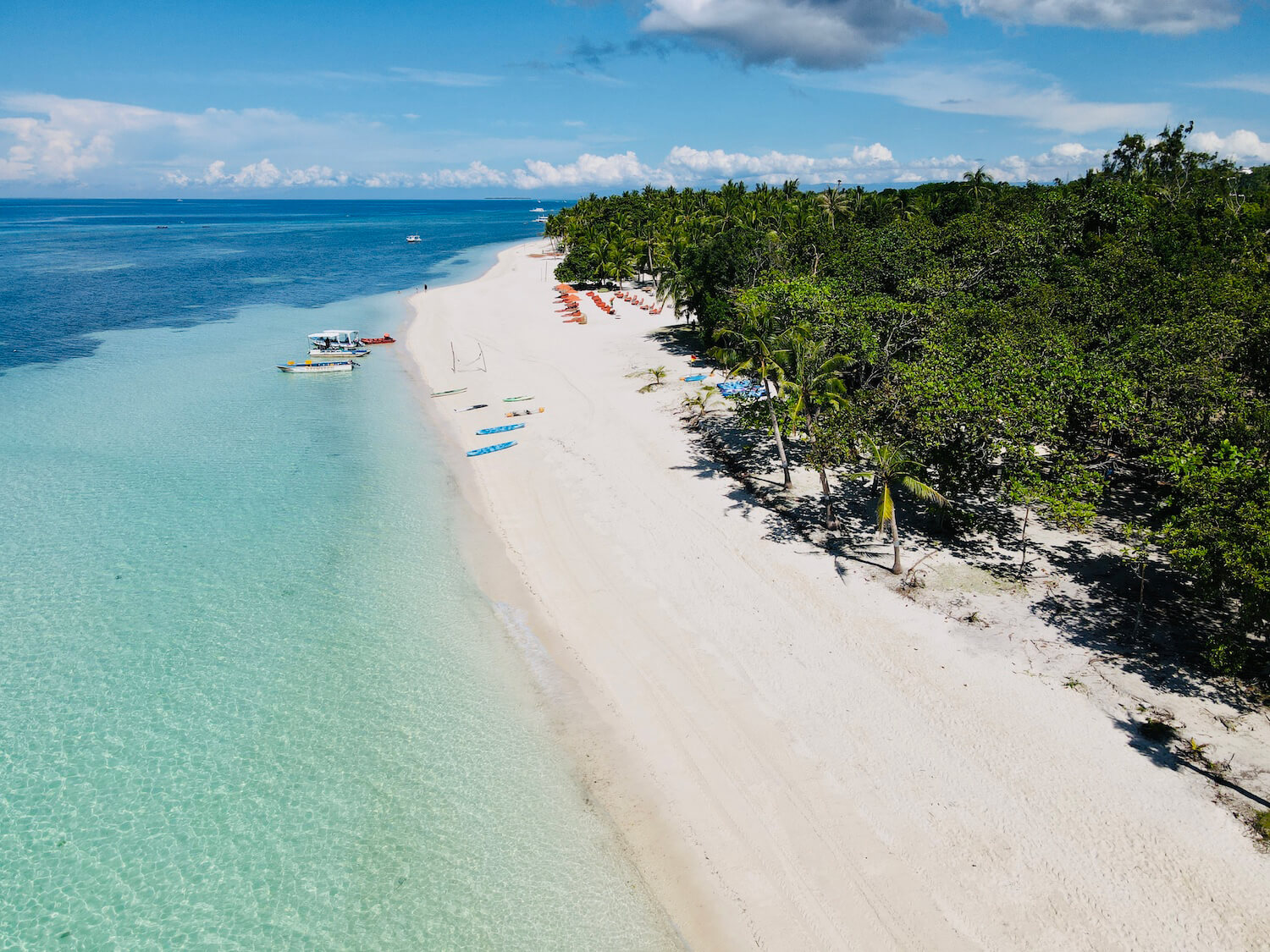
White sand and leaning coconut palms
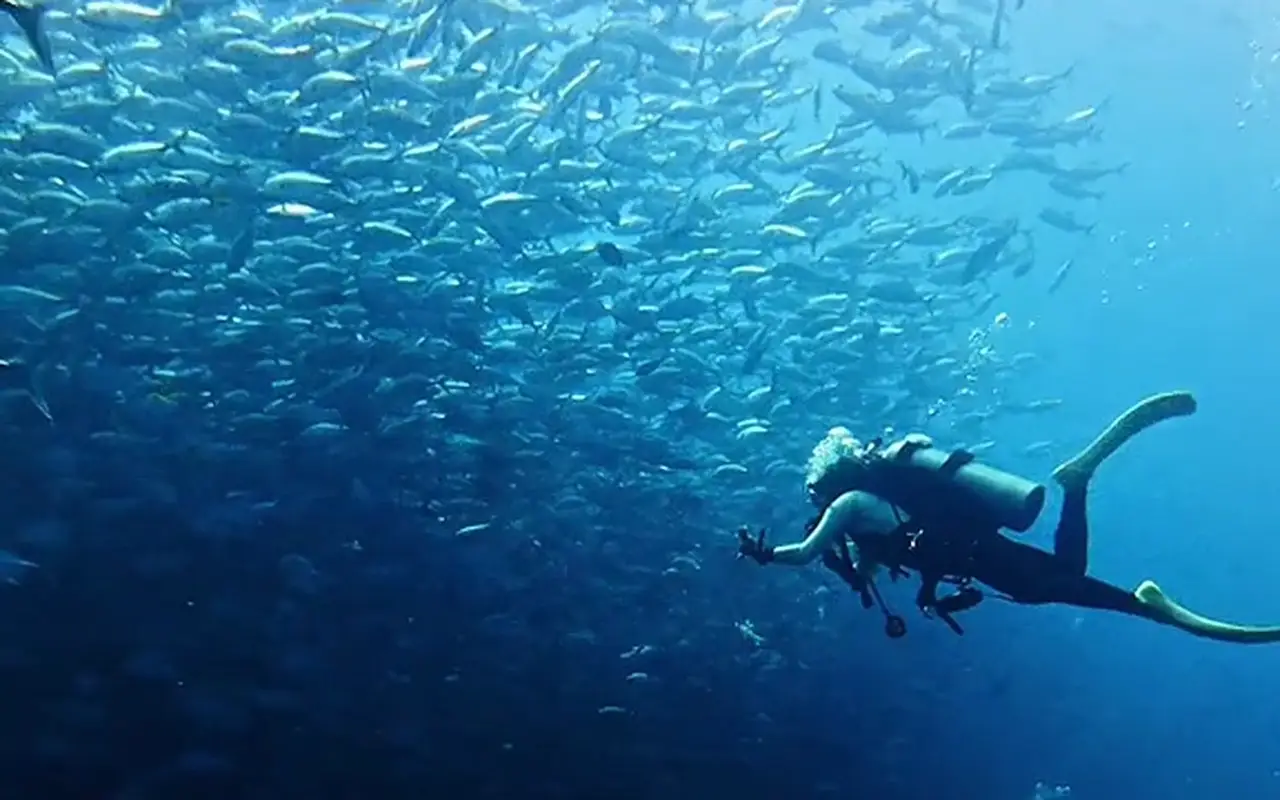
Clear visibility and sun rays underwater
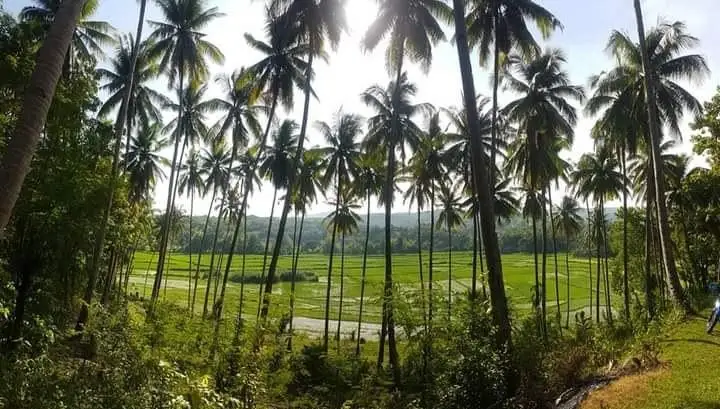
Dense mahogany trees arching over the road
Every destination has its own cultural quirks and operational realities. Travelers expecting a perfectly sanitized resort enclosure are often surprised by the vibrant realities of rural Philippine life.
Expect the 4 AM rooster chorus, village karaoke, unexpected tropical rain showers, and a slow island rhythm where service and transportation move at an unhurried pace.
👉 Get ready for your trip: Read our complete logistical manual in our Bohol Travel Tips.
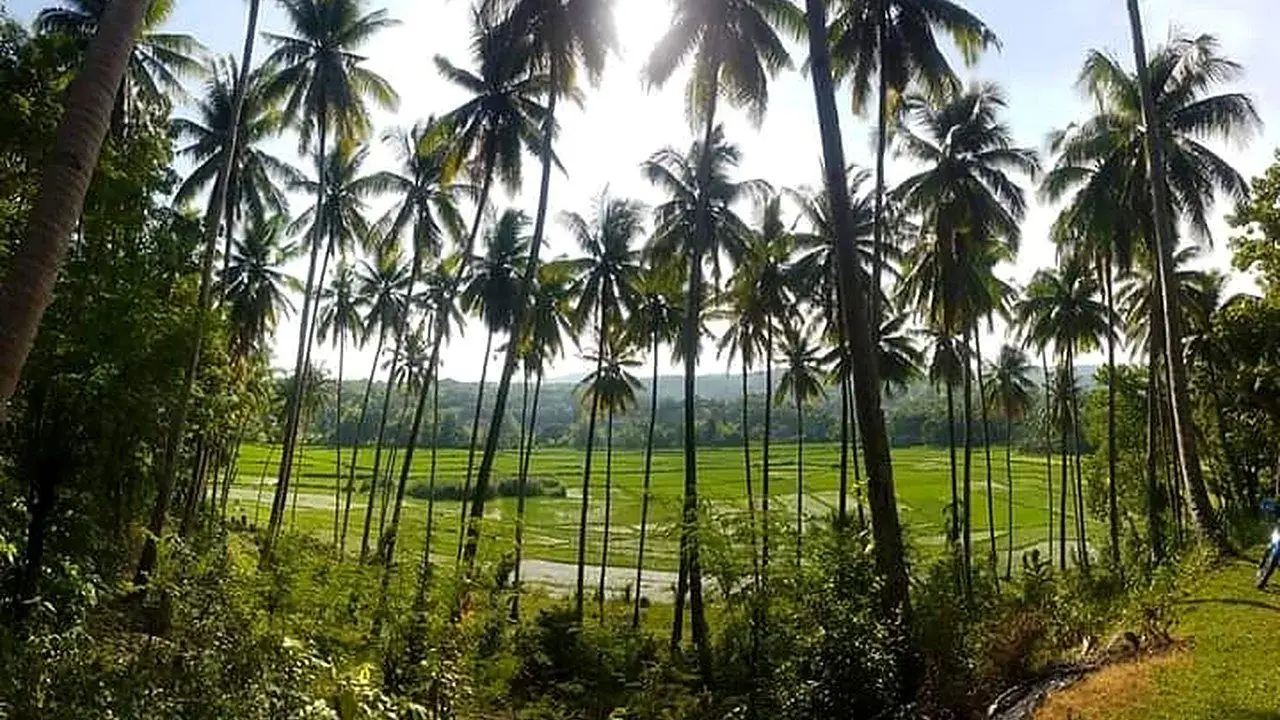
Bohol features some of the finest tropical coastlines in the country, but different beaches offer completely different atmospheres.
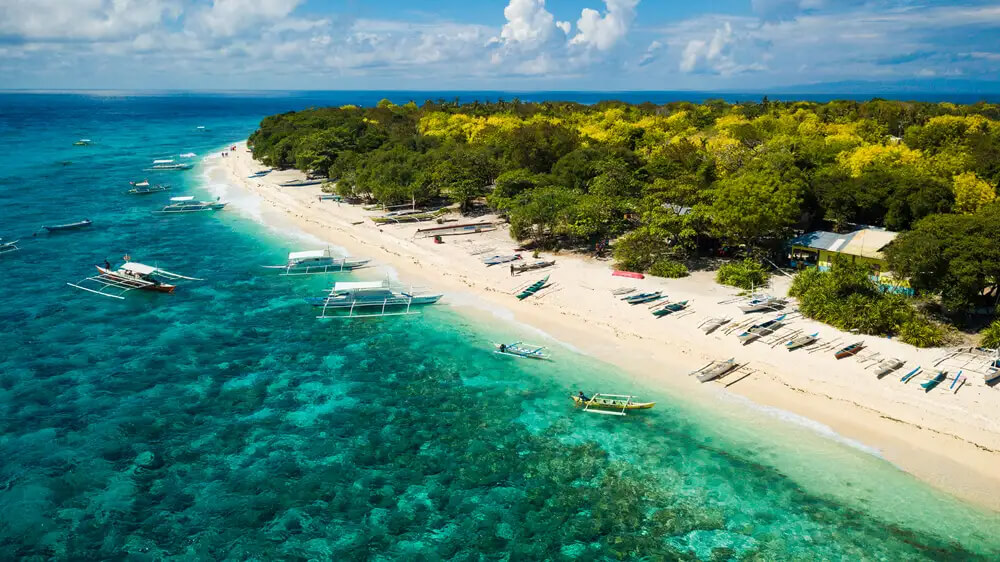
Alona Beach is the vibrant heart of tourism on Panglao Island. It is packed with dive shops, restaurants, bars, and open-air clubs. It is convenient, lively, and social, but can feel crowded during peak season.
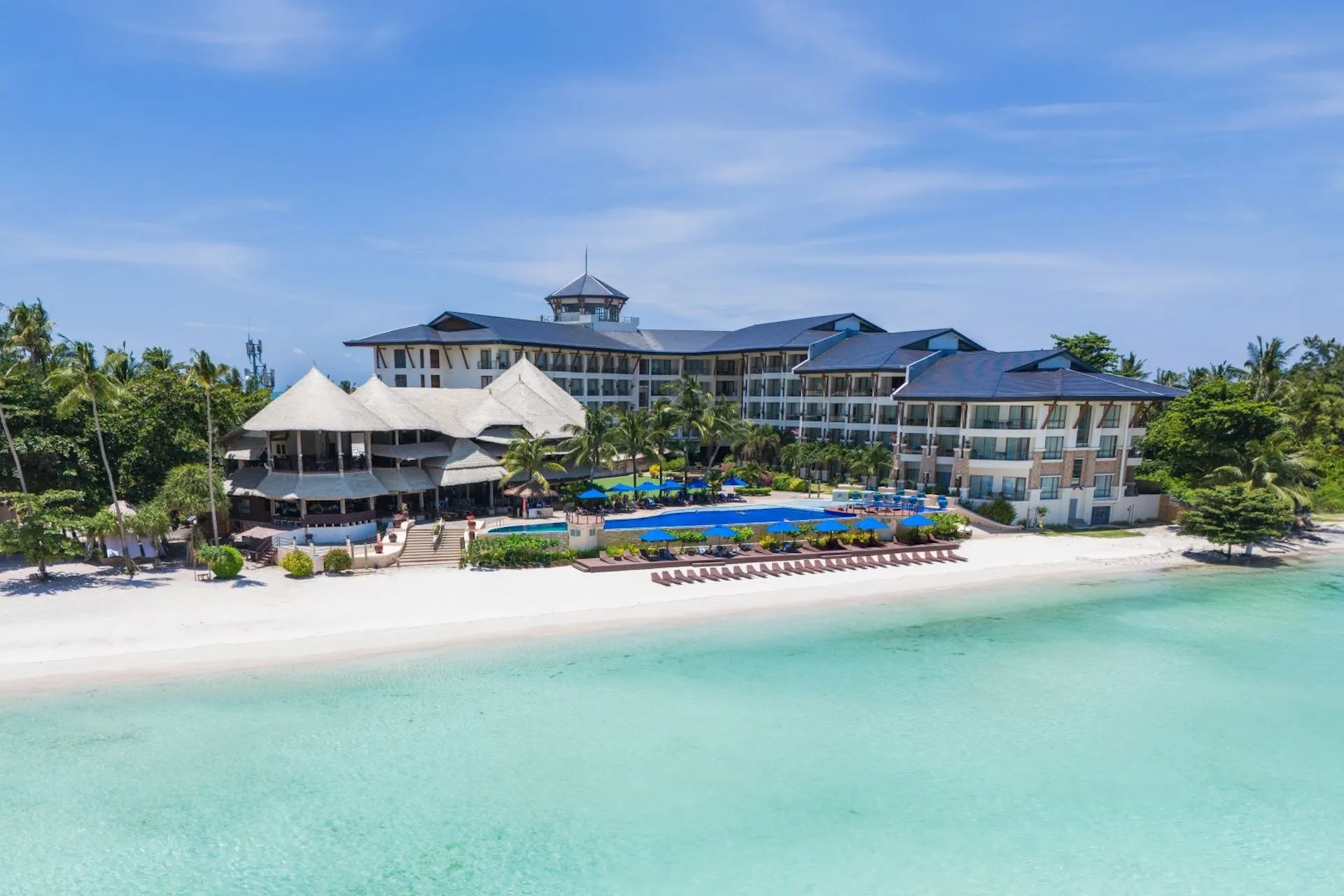
Doljo Beach offers a calm, slow-paced alternative to Alona. It is ideal for long walks, sunset views, and quiet afternoons away from mass tourism.
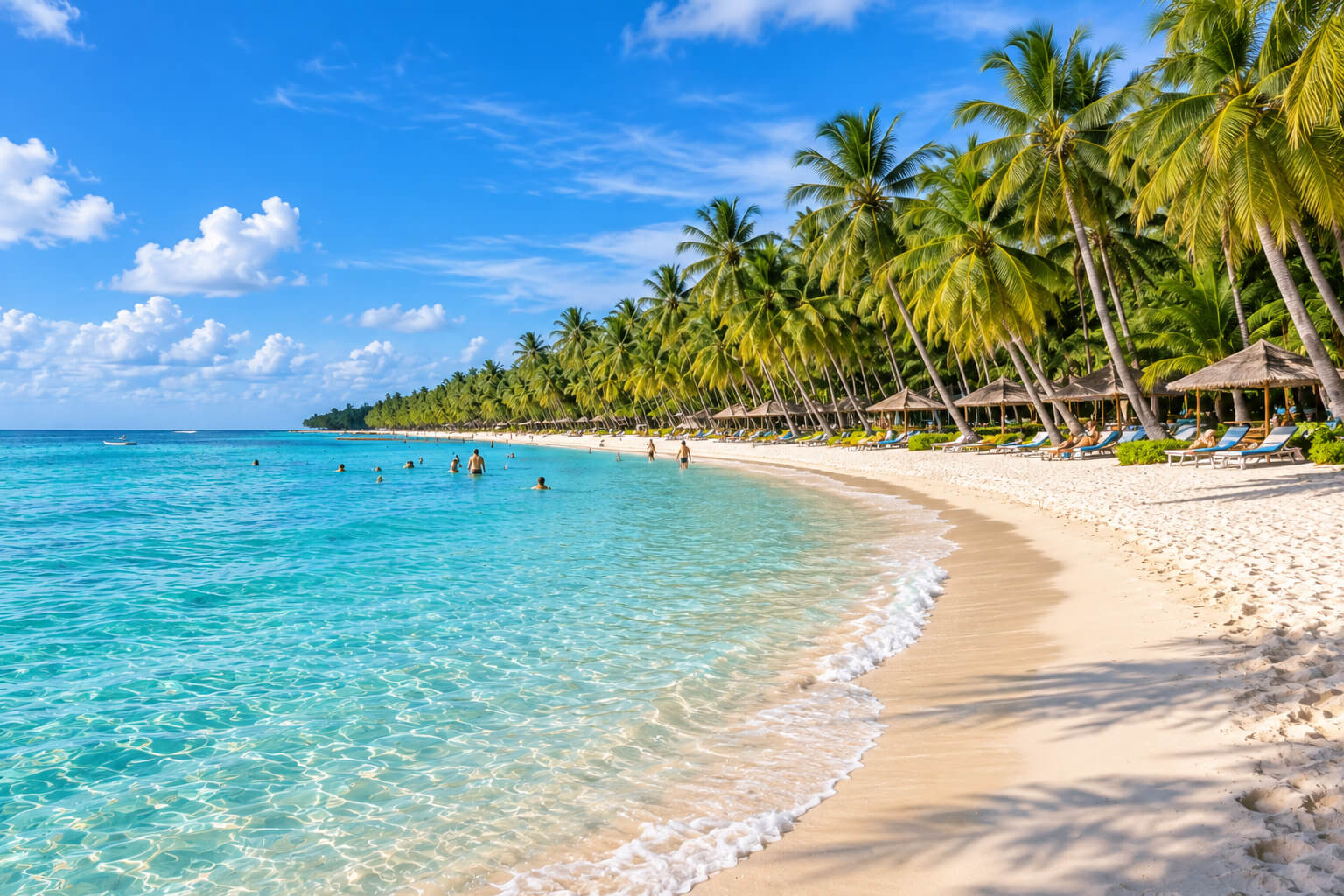
Dumaluan is often considered one of the most beautiful beaches on Panglao Island. It offers wide white sand, calm water, premium resorts, and a tranquil atmosphere.
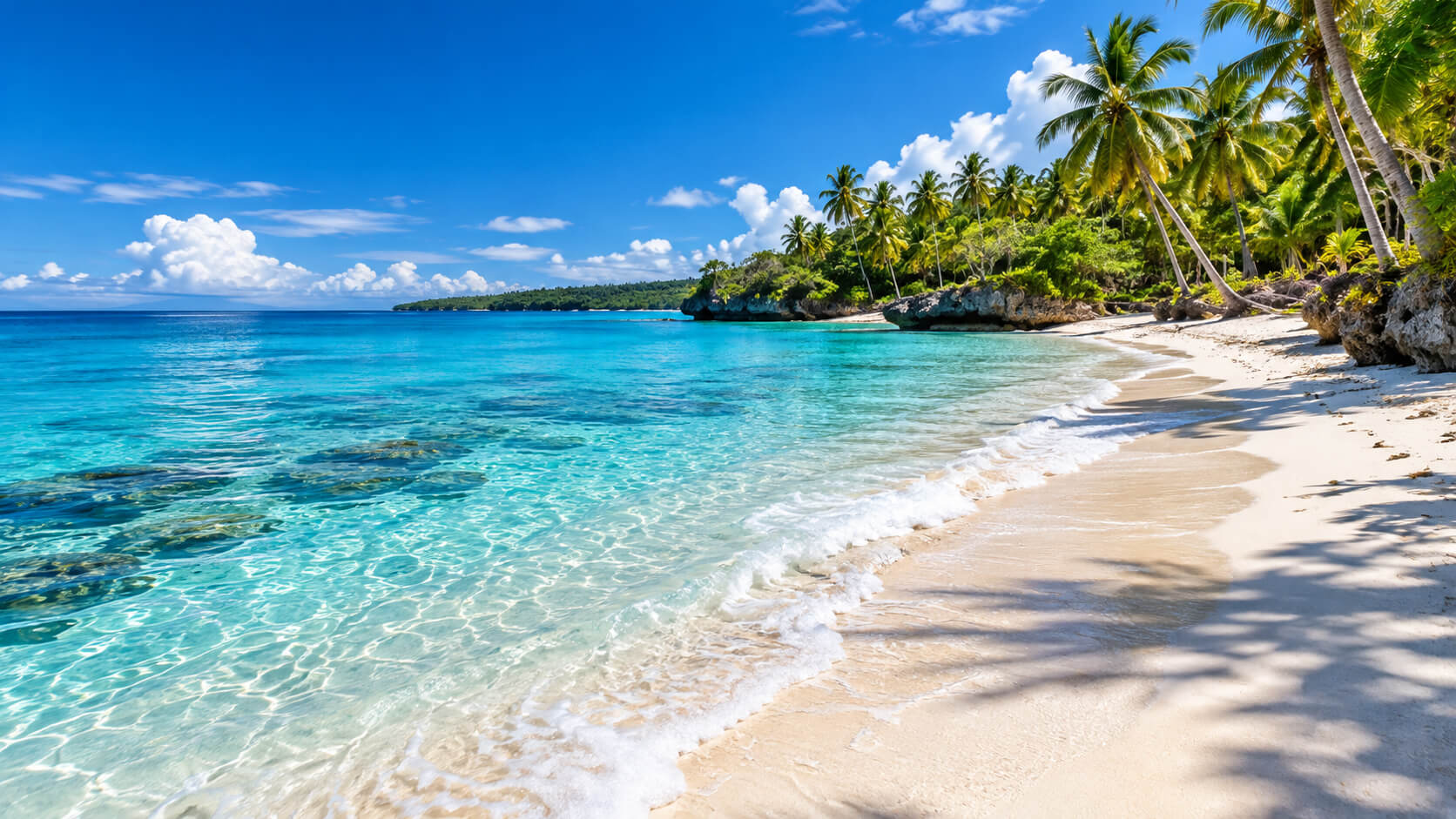
Anda rewards travelers with remote, pristine, and untouched beaches far from the major commercial complexes of Panglao.
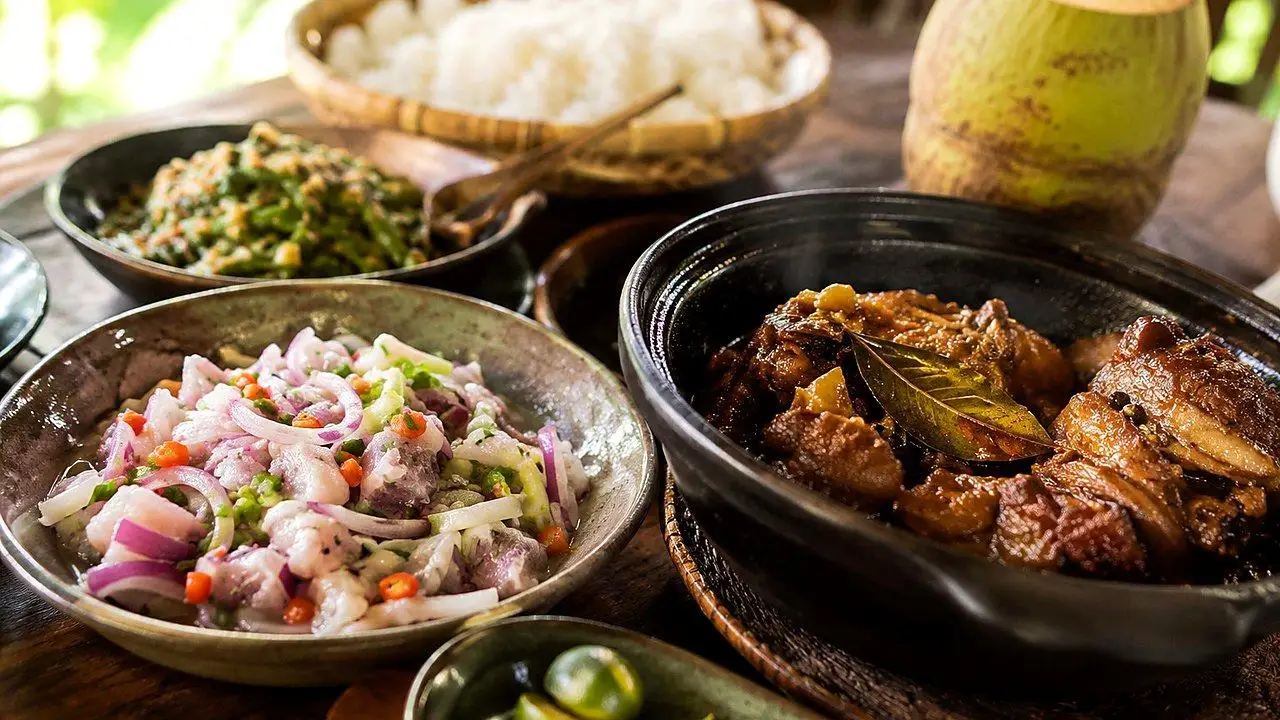
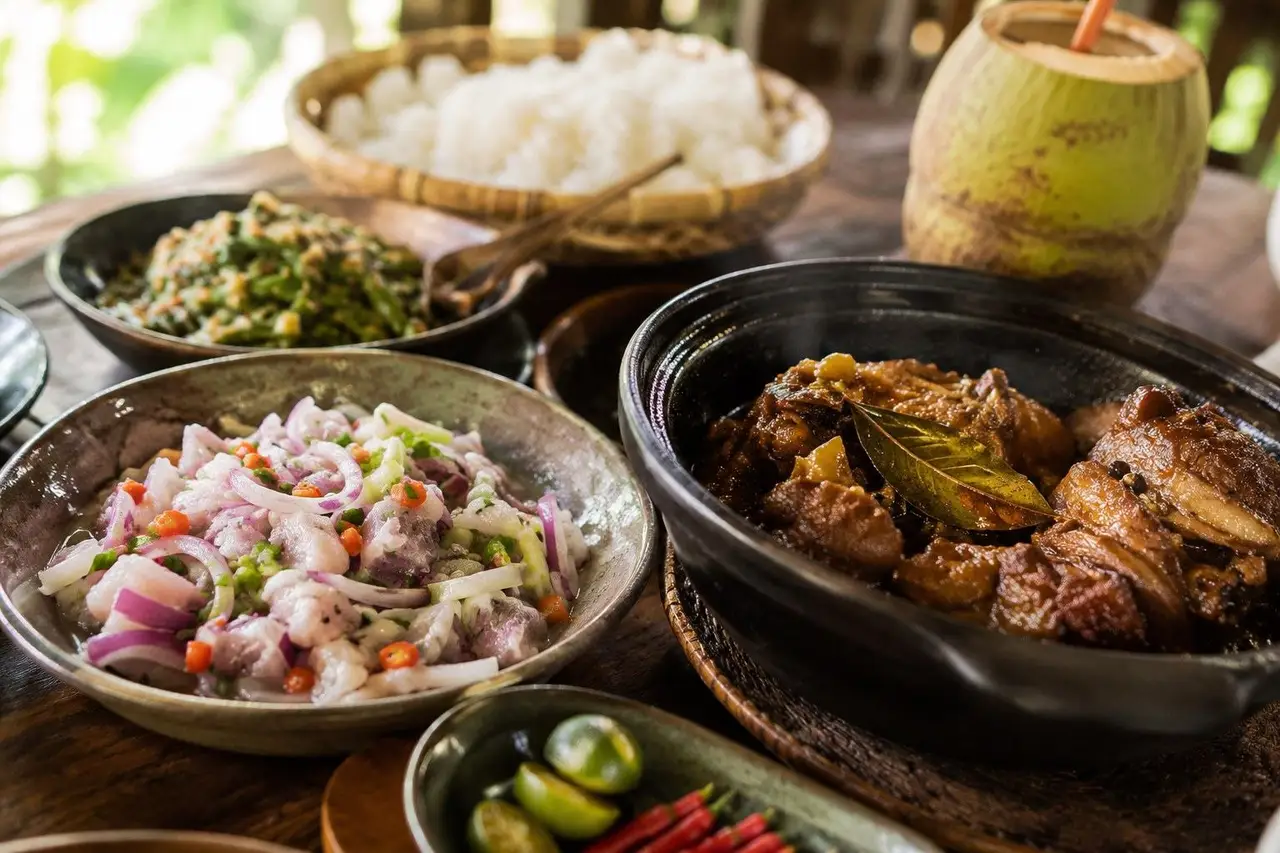
Panglao’s culinary scene has expanded far beyond basic island fare, offering authentic Filipino food, beachfront seafood spots, and international cafés.
To experience real Visayan cooking, choose local eateries specializing in traditional dishes and family- style meals.
Beachfront restaurants along Alona and Dumaluan offer sunset seafood dinners with tables directly on the sand.
Panglao has become popular with slow travelers, divers, and digital nomads, creating a strong coffee and brunch culture.
The biggest mistake travelers make is not staying long enough. The longer you stay, the more Bohol rewards you.
Perfect for short trips and first-time visitors.
Day 1: Panglao arrival, beach walk, and sunset in Alona Beach.
Day 2: Mainland island tour with Chocolate Hills, tarsiers, and colonial churches.
Day 3: Scuba diving or island hopping boat charter.
The perfect balance between activity and relaxation.
Day 1: Arrival and beach relaxation in Panglao.
Day 2: Fully guided mainland tour.
Day 3: Diving or snorkeling day trip.
Day 4: Inland waterfalls and countryside roads.
Day 5: Beachfront lounging and local dining.
Ideal for travelers wanting a slower experience with complete local immersion, including Anda, hidden gems, and deep marine walls without any rush.
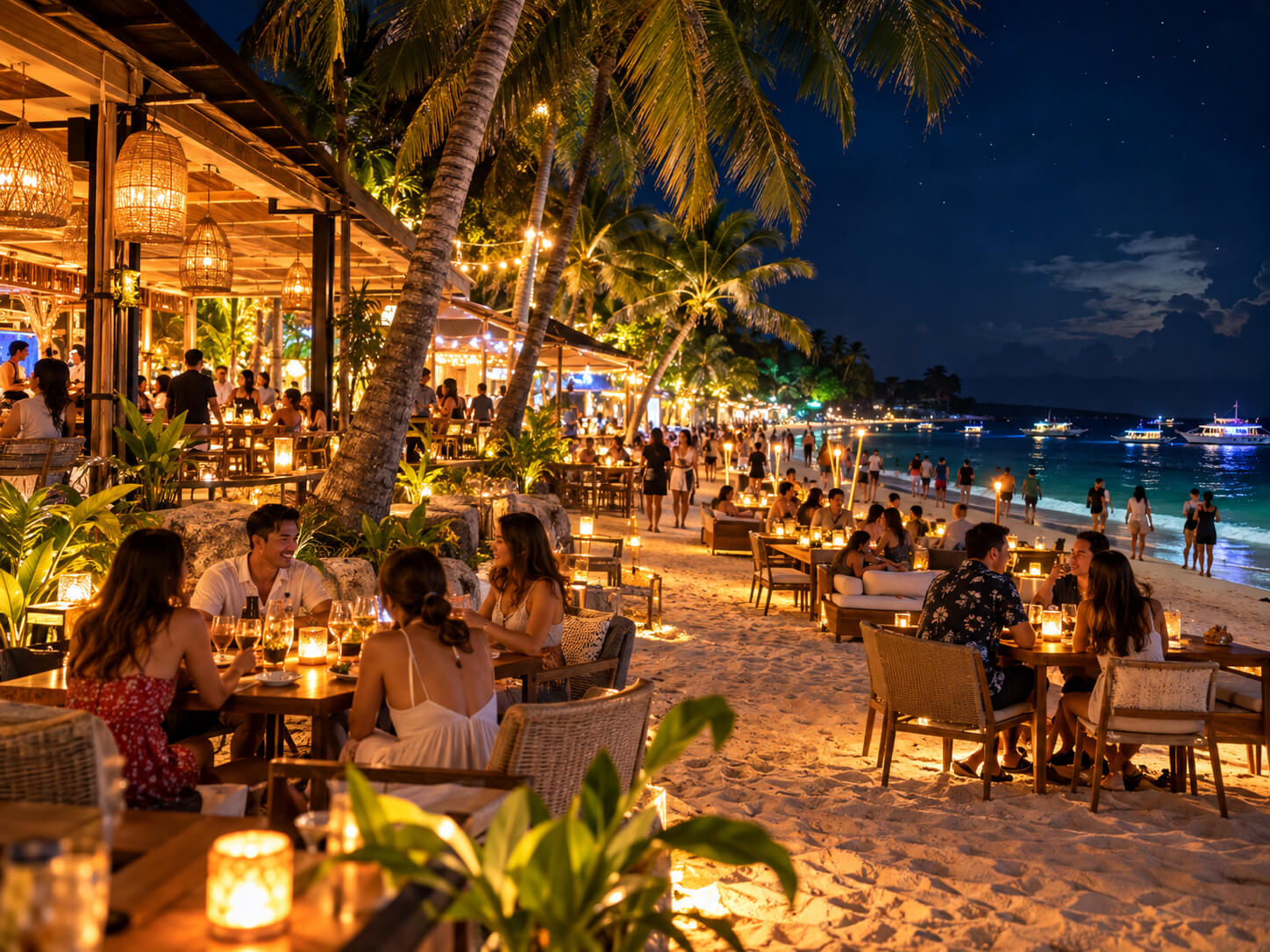
When the sun drops below the horizon, Bohol shifts from daytime adventure into a tropical evening destination.
Alona Beach becomes the bright focal point of the island after dark, with ambient bars, reggae bands, and fire-dancing performances.
For romance and relaxation, head to Dumaluan or Bolod Beach for a candlelit seafood dinner beside calm waves.
For certified divers, the adventure does not stop when the sun goes down. Night diving reveals octopuses, crabs, hunting nocturnal fish, and marine bioluminescence.
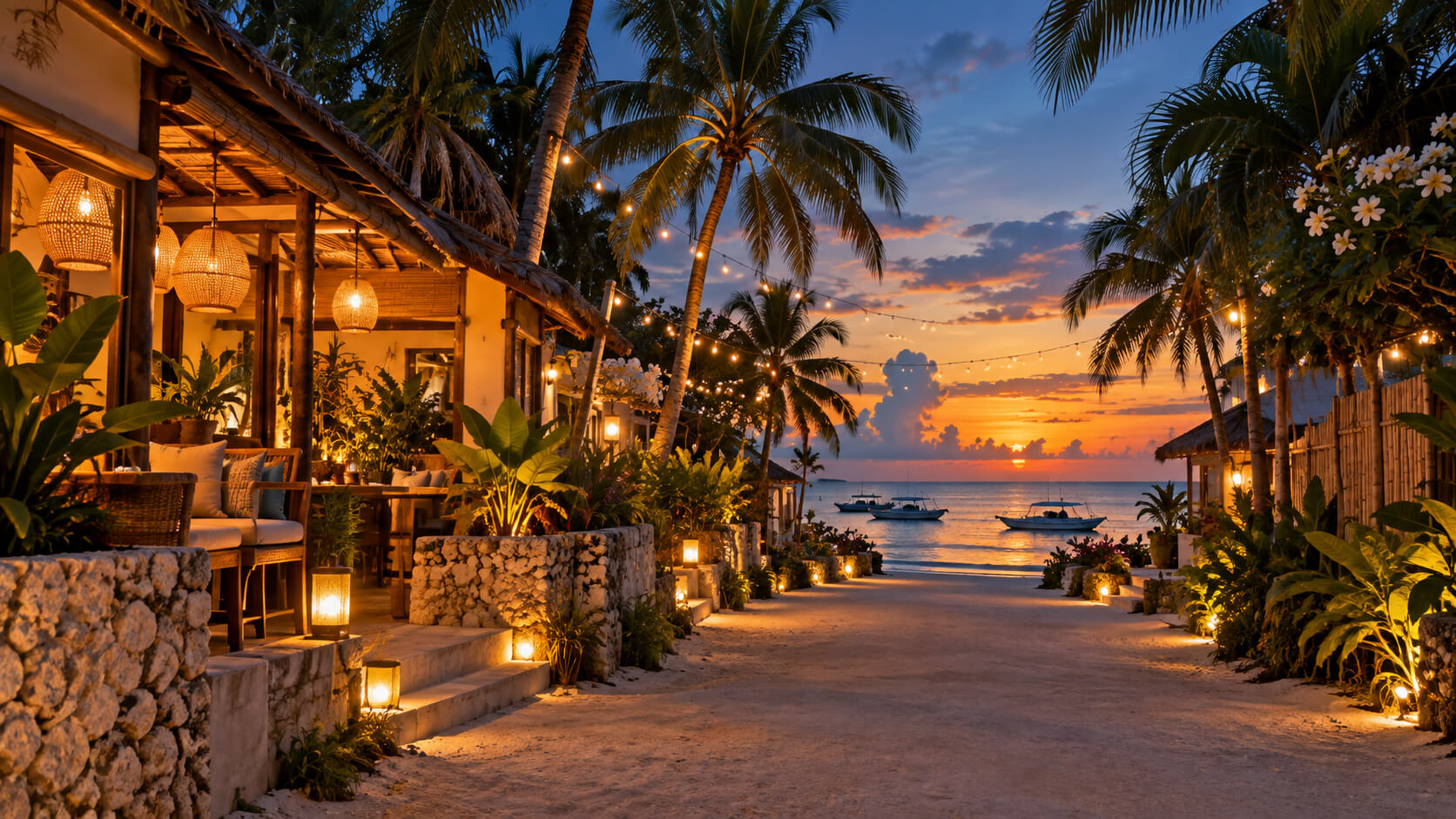
Quiet beachfront resorts in Bolod and Dumaluan remain peaceful and popular among couples and families.
Bohol possesses spectacular coastlines, but viewing it only as a beach destination is a disservice to its true character. Its strength lies in geographic and cultural diversity.
Few islands in Southeast Asia allow travelers to experience coral walls, limestone formations, tropical rainforests, colonial history, and wildlife encounters in one location.
Bohol is not merely a destination to cross off a bucket list; it is an island where travelers can connect deeply with nature, the ocean, history, and local people.
We highly recommend staying at least 4 to 7 days to enjoy diving, mainland tours, waterfalls, food, and dedicated relaxation.
Absolutely. Bohol is one of the most complete destinations in the Philippines because it balances marine life, history, wildlife, and local communities.
The top activities include scuba diving at Balicasag Island, freediving, Doljo sunset, Napaling snorkeling, beachfront restaurants, and Alona nightlife.
Families enjoy the Tarsier Sanctuary, Chocolate Hills, Dumaluan Beach, and organized countryside van tours.
Couples love beachfront dinners, sunrise boat trips, learning to dive together, hidden cave pools, and quiet sunset views.
Yes. Travelers can use private vans, tricycles, ride-sharing apps in populated zones, or organized guided tours.
The Chocolate Hills are the most globally recognized natural landmark in Bohol.
Yes. Bohol is one of the premier diving destinations in the Philippines, especially around Panglao, Balicasag, and Pamilacan.
Bohol is one of those rare islands where every detour rewards you with something unforgettable. Whether you arrive for diving, waterfalls, history, or romance, the island consistently delivers depth to travelers who approach it with open eyes.
The golden rule is simple: do not rush.
Take your time. Talk with local people. Taste the flavors of carinderias. Drive beyond Alona Beach, look underwater, and explore the interior highlands. If you slow down and let the island reveal itself naturally, you will understand why so many travelers leave already thinking about coming back.
Full marine site breakdowns, seasonal conditions, and marine life targets.
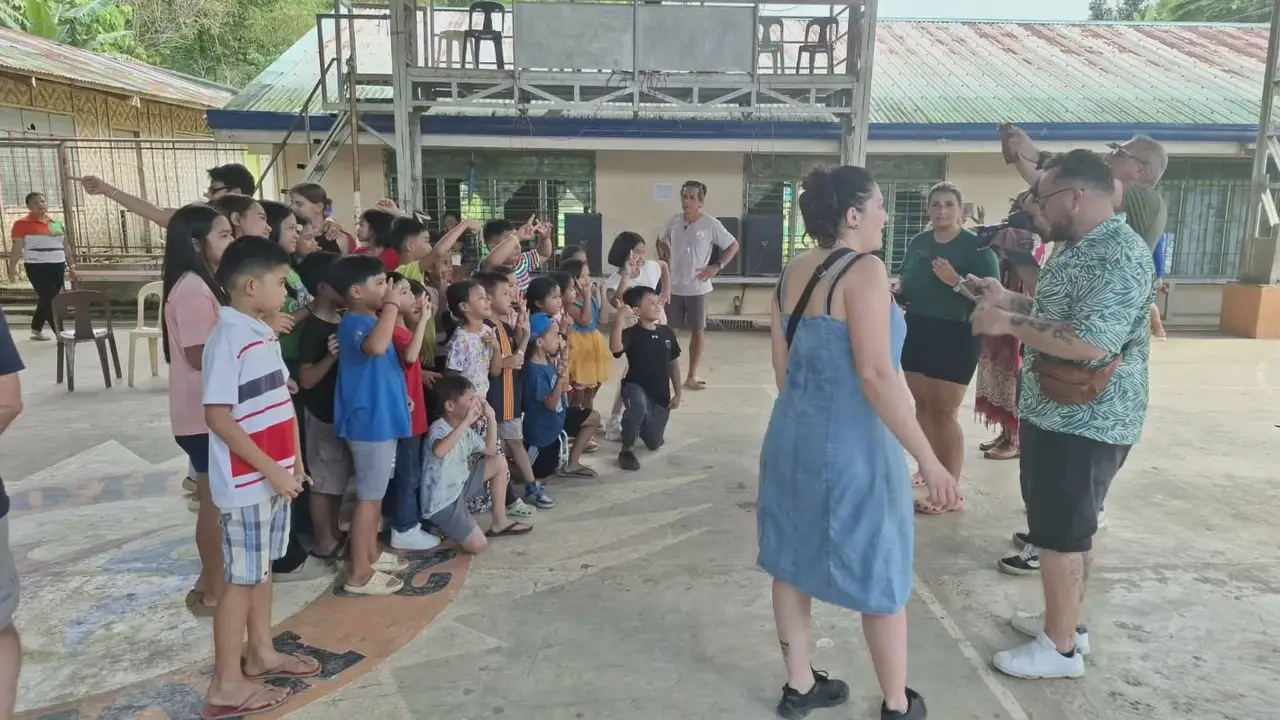
Private and small-group exploration of the interior hills and culture.
Essential logistics, currency, and transportation safety guidelines.
Curated reviews of the best resorts in Panglao and Bolod.
A complete look into the colonial past, Blood Compact, and coral-stone churches.